

The Driver Again
By the time Sally Watts drove through the gates of Willowbank Raceway, she was already looking for a way out.
The conversation had started somewhere on the approach to the venue and followed her all the way to the entrance. Around her, competitors were arriving for the Gulf Western Oil Winternationals, Australia’s largest championship drag racing event. Crews were unloading race cars. Engines were being warmed. Final preparations were underway.
Sally wasn’t thinking about any of that.
She was wondering whether she should turn around and go home.
Just five months earlier, Sally had begun the process of licensing a Supercharged Outlaws dragster after nearly twenty years away from the driver’s seat. The journey had started in January and wasn’t completed until April, meaning she arrived at the Winternationals with only weeks of experience in the car and no competitive Supercharged Outlaws racing behind her. Now she was staring down a field of seasoned competitors and questioning whether she belonged amongst them.
“I said to Matt driving through Willowbank’s gates on Wednesday, ‘I’m not sure I can do this. Are you okay if I pull out?'”
There was no drama in the question.
No tears.
No meltdown.
Just an honest admission from someone confronting the gap between a dream and its reality.
Together, Sally and her husband agreed she’d take qualifying one run at a time. If it didn’t feel right after the first pass, there was no shame in stepping away.
It seemed a reasonable plan.
What happened next was anything but.
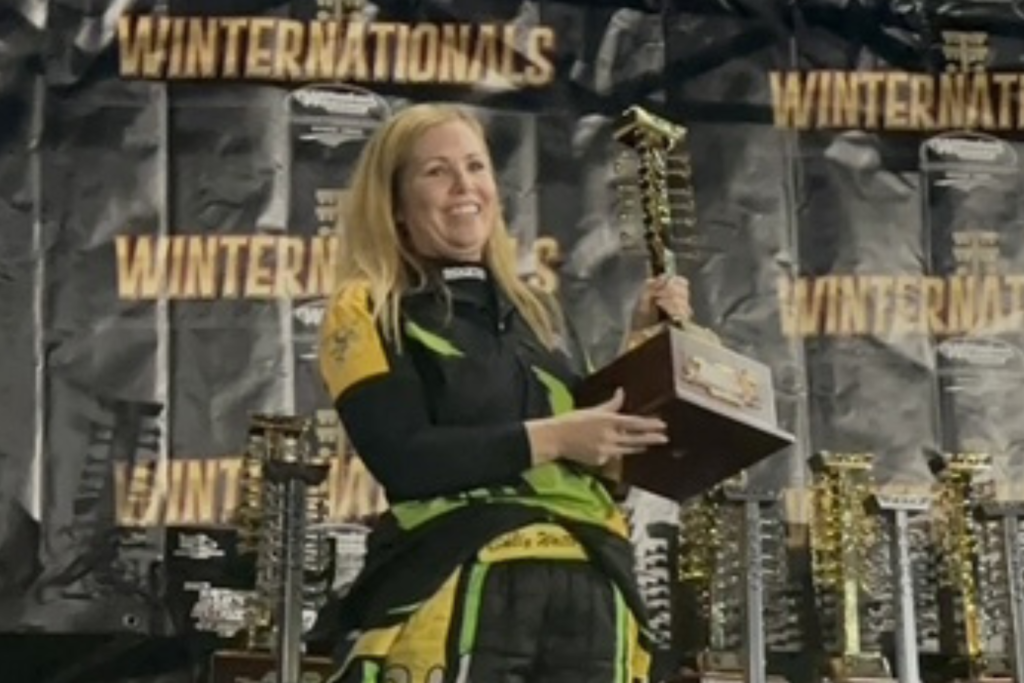
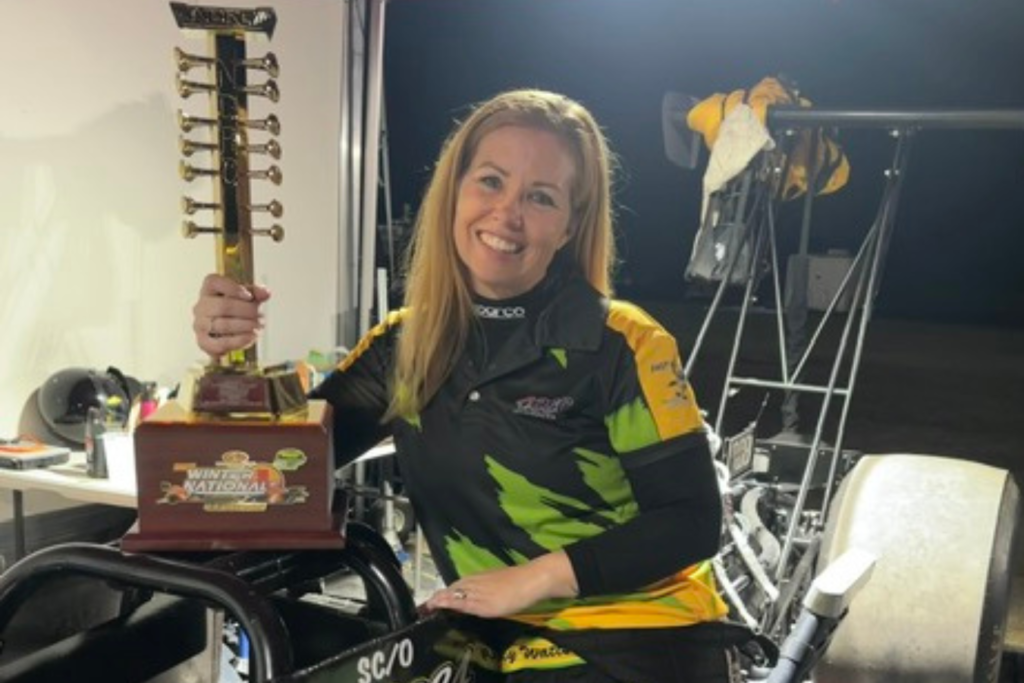
Three days later, Sally Watts stood as the 2026 Winternationals Supercharged Outlaws champion.
Even now, she still sounds surprised by it.
“I’ve cried more happy tears in the past three days than I have in years.”
The victory itself was remarkable.
The path that led there may be even more so.
Because while Sally’s name appeared in the winner’s circle that weekend, her story didn’t begin there.
It began decades earlier.
Long before the trophies.
Long before the dragster.
Long before she ever questioned whether she should race.
 For some people, motorsport arrives as a discovery.
For Sally, it was simply life.
She grew up as the granddaughter of Australian drag racing identities Gentleman Jim Reed and lady racer Nelma Reed. Race meetings weren’t special occasions; they were part of the family calendar. Conversations about engines, reaction times and race strategy formed the soundtrack of everyday life.
The sport was never presented as something extraordinary.
It was normal.
As natural as school, work or family gatherings.
Sally followed her own path into competition, racing Junior Dragster before progressing into Modified. She earned her licence, accumulated experience and established herself behind the wheel.
Then life began demanding attention elsewhere.
Careers needed building.
Families needed raising.
Responsibilities multiplied.
The driver’s seat gradually gave way to other roles.
Crew member.
Support person.
Wife.
Mother.
The shift wasn’t dramatic enough to mark with a specific date. It happened the way many changes do — slowly, almost unnoticed, until one day you realise years have passed.
In Sally’s case, nearly twenty of them.
“It’s been almost twenty years since I’ve been the driver and not the crew.”
There is something quietly familiar about that statement.
Particularly for women.
Passions rarely disappear completely. More often, they are packed away temporarily while other priorities take centre stage. The intention is always to return someday.
Someday, however, has a habit of moving further away.
Sally never left drag racing.
She remained surrounded by it.
She married into another racing family.
Weekends continued to revolve around race tracks.
She watched, supported, learned and contributed.
When people around her were talking about race cars, she was listening.
Even if they didn’t always realise it.
“No training, but over my life when people think I wasn’t listening, I was taking it all in.”
The years may have passed, but the knowledge never disappeared.
Neither did the desire.
 The opportunity to return didn’t arrive overnight.
Like most race cars, the journey began in a shed.
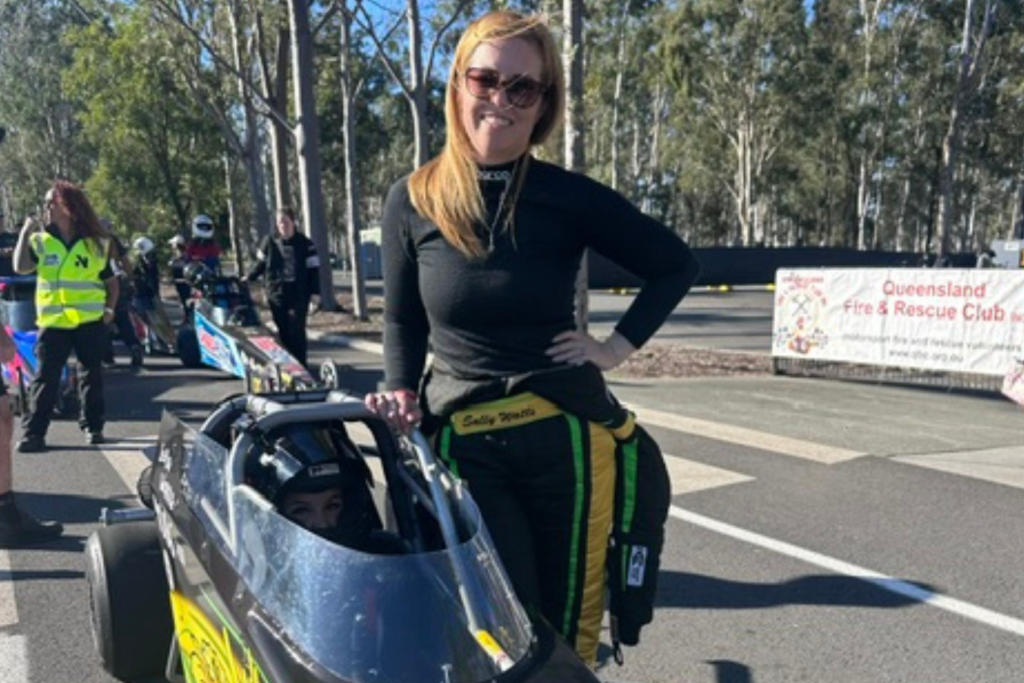
The Supercharged Outlaws dragster Sally now drives represents countless hours of work shared between family members. Her husband Matt and father-in-law Guy Watts were central to the project, helping transform an idea into something capable of competing on one of the country’s biggest stages.
“My husband Matt and father-in-law Guy. We built this car together.”
The statement is matter-of-fact.
The reality is anything but.
Race cars consume time.
They consume money.
They consume weekends, evenings and annual leave.
Every polished component and completed pass carries a hidden history of problem-solving and persistence.
The family documented the process as the dragster gradually came together. Wheels were refurbished. Components fabricated. Modifications completed. New parts sourced and fitted.
Progress arrived in small increments.
Then suddenly it was January.
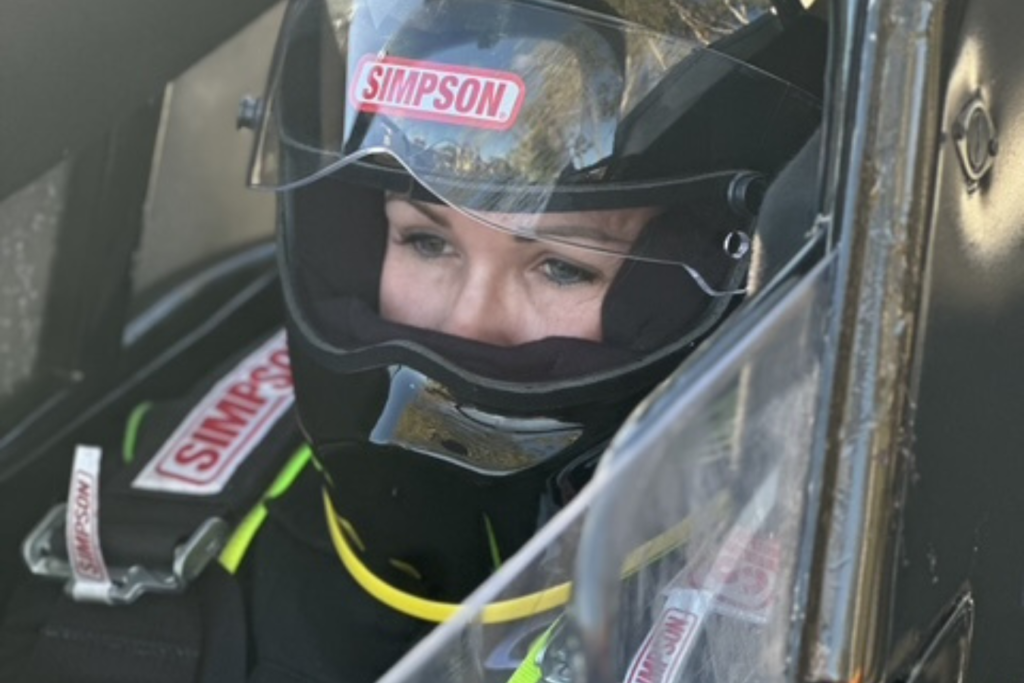
And Sally was climbing back into a dragster.
The return wasn’t seamless.
Licensing brought mechanical challenges, aborted runs and inevitable frustrations.
At one point, the car repeatedly shut down during the burnout.
Fuel issue?
Electrical issue?
Nobody knew for certain.
The important thing was that they kept working.
The important thing was that she kept climbing back in.
For someone who had spent so long supporting other people’s racing ambitions, becoming the driver again required more than technical preparation.
It required trust.
Trust in the car.
Trust in the people around her.
Trust in herself.
Perhaps most importantly, it required permission.
Permission to take up space.
Permission to pursue something purely because she wanted it.
Permission to become more than the person helping everybody else reach the start line.
By April, Sally had completed the licensing process and officially qualified to compete in Supercharged Outlaws. The achievement represented the culmination of months of preparation, testing and persistence, but the Winternationals would become her first opportunity to line up against another competitor in competition.
The prospect was equal parts exciting and intimidating.
“My heart pounded outside of my chest each run, my legs were shaking after each run but I still did it.”
The nerves weren’t disappearing.
They were simply becoming part of the process.
 While Sally was rediscovering life behind the wheel, another chapter was beginning within the family.
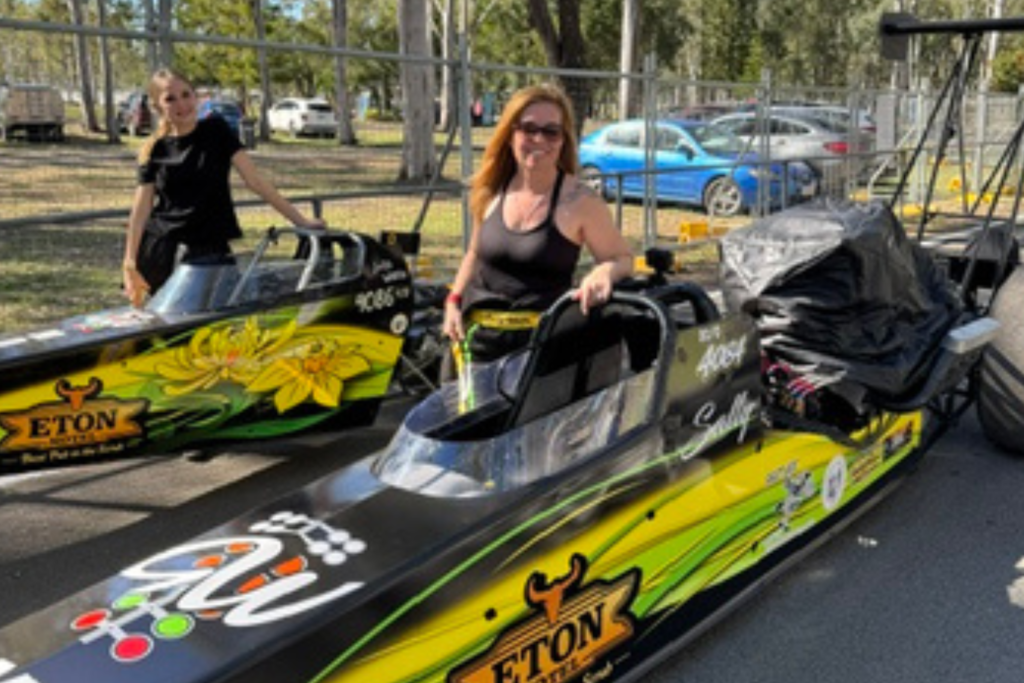
Her daughters, Leila and Macee, had both licensed in Junior Dragster within the previous year and shared driving duties in the family’s Junior Dragster program at Sydney Dragway. With Leila approaching the age where she would eventually move on from the category, the family decided 2026 would be her year to experience the Winternationals.
It meant that while Sally was making her Supercharged Outlaws debut at Australia’s biggest drag racing event, her eldest daughter was experiencing her own first Winternationals campaign.
For families outside motorsport, it can be difficult to explain the attraction.
The long drives.
The late nights.
The financial commitment.
The inevitable disappointments.
Yet families like the Reeds and the Wattses understand something others often don’t.
Motorsport isn’t simply about racing.
It’s about shared experiences.
Shared language.
Shared memories.
It creates opportunities for generations to spend meaningful time together in ways few other pursuits can match.
When Sally talks about what she loves most, the answer isn’t horsepower or speed.
“It’s the adrenaline, the excitement and the family time.”
The order feels significant.
Because while the speed provides the thrill, the family provides the reason.
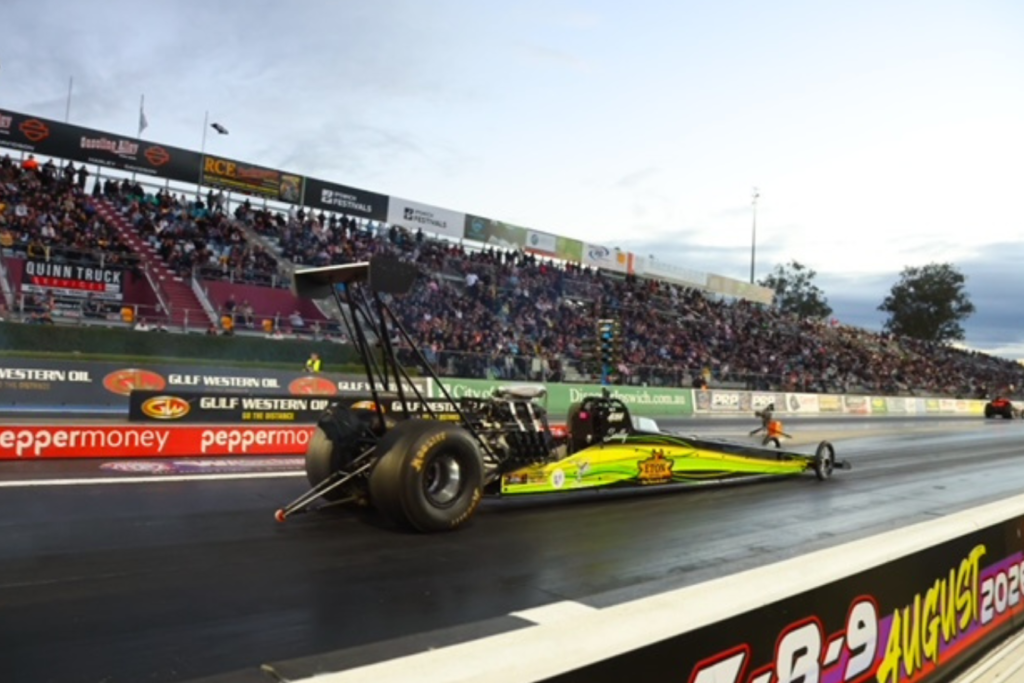 By the time the Winternationals arrived, expectations remained modest.
Qualifying itself represented an achievement.
The objective was simple.
Learn.
Improve.
Enjoy the experience.
The opening qualifying sessions delivered encouraging signs.
A 7.18.
A 7.17.
Then a 7.11-second personal best.
The dragster was consistent.
Sally was gaining confidence.
Still, nobody was talking about winning.
Least of all Sally.
After all, she had only been licensed a matter of months.
Many of her competitors had spent years refining their craft.
Round one arrived.
Then something unexpected happened.
She won.
Round two brought another victory.
A new personal best of 7.09 seconds.
Another surprise.
Another reason to keep racing.
Another opportunity to continue living in the moment.
“This was never in our wildest dreams.”
Round three delivered one of the closest races of the meeting.
Lining up against Christine Steffens, Sally recorded a near-perfect 7.09-second pass on a 7.09 dial-in while both cars crossed the finish line almost together.
Again, she advanced.
Again, disbelief followed.
The deeper she progressed, the less the event resembled the cautious experience she had imagined while driving through the gates days earlier.
The field was shrinking.
The possibility was growing.
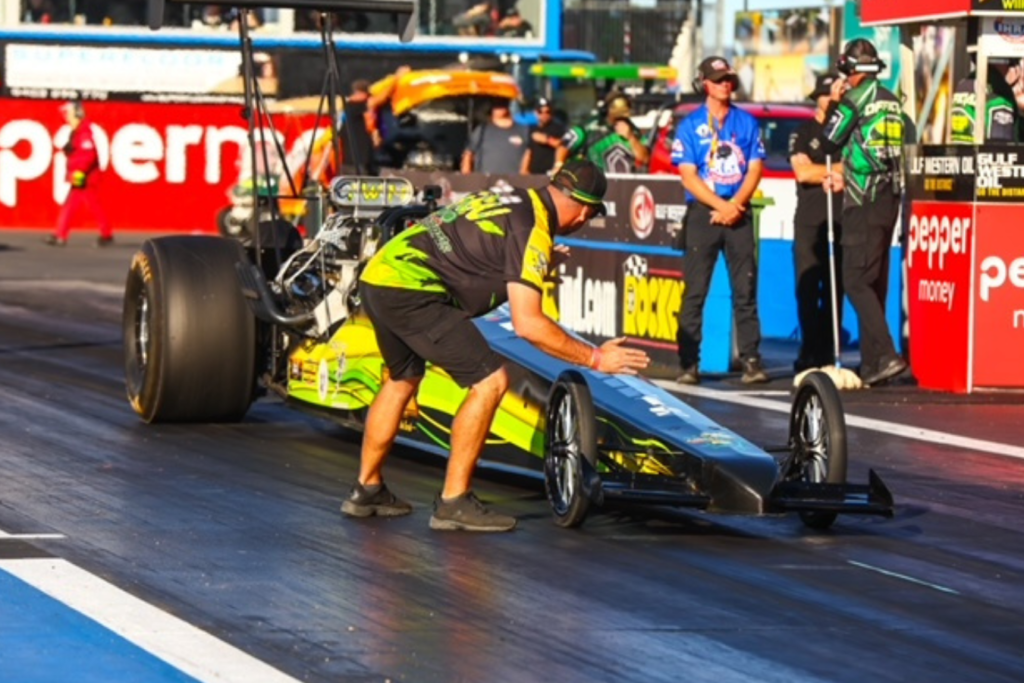 Yet even then, the path remained anything but straightforward.
Earlier in eliminations, a problem with the dragster’s automatic shifter forced Sally to manually shift the car mid-run. As Peter Leahy drove around her, she assumed the race was over and focused simply on getting the car to the finish line. Only later did she discover she had advanced.
It became a recurring theme of the weekend. Things were not always what they appeared from inside the cockpit.
That understanding would become particularly important in the final.
Because when the deciding race arrived, Sally immediately assumed she had thrown everything away.
The start sequence unfolded.
The lights flashed.
The race began.
Then came the red light.
For most competitors, the meaning would have been obvious.
Game over.
Sally accepted the outcome almost immediately.
Disappointment perhaps, but not devastation.
The weekend had already exceeded every expectation.
She had qualified strongly.
Recorded personal bests.
Won multiple rounds.
Proven she belonged.
The result of the final no longer seemed especially important.
Then everything changed.
Her opponent crossed the centreline.
A more serious infraction.
The race was hers.
Moments later, Michelle Morrison delivered the news.
Sally had won the Winternationals.
The reaction wasn’t a celebration so much as disbelief.
A flood of emotion.
Relief.
Joy.
Shock.
Validation.
All arriving simultaneously.
“It was this moment I was told I’d won.
I had already accepted the loss on the tree but knew we were already taking away so many positives from this meeting. We honestly had not one complaint.
I wouldn’t have shed a tear for losing. It was honestly what I was expecting.
Every round win was a shock and we were absolutely living in the moment.”
Those words explain the achievement better than any statistic could.
Because the victory wasn’t built on entitlement.
It wasn’t built on expectation.
It was built on gratitude.
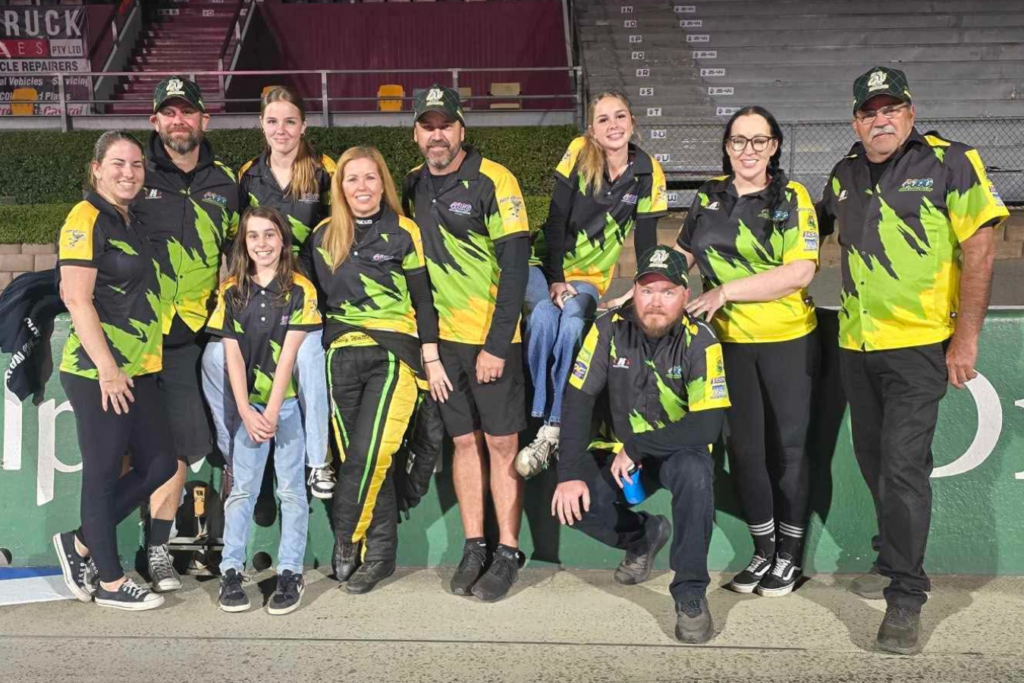
Back in the pits, Sally’s thoughts quickly returned to the people who helped make the weekend possible.
Matt.
Guy.
Alex.
Nathan.
The crew members who invested their own time and energy into the campaign.
The people who believed the dream was worth chasing long before there was a trophy to justify it.
“This weekend wasn’t even possible without them.”
Success in drag racing often appears individual from a distance.
In reality, it is rarely achieved alone.
Sally understands that better than most.
For years, she was one of those people working behind the scenes.
One of the crew.
One of the supporters.
One of the people helping someone else pursue a goal.
Perhaps that’s why the victory feels different.
It wasn’t simply her win.
It belonged to everyone who had helped carry the project to that moment.
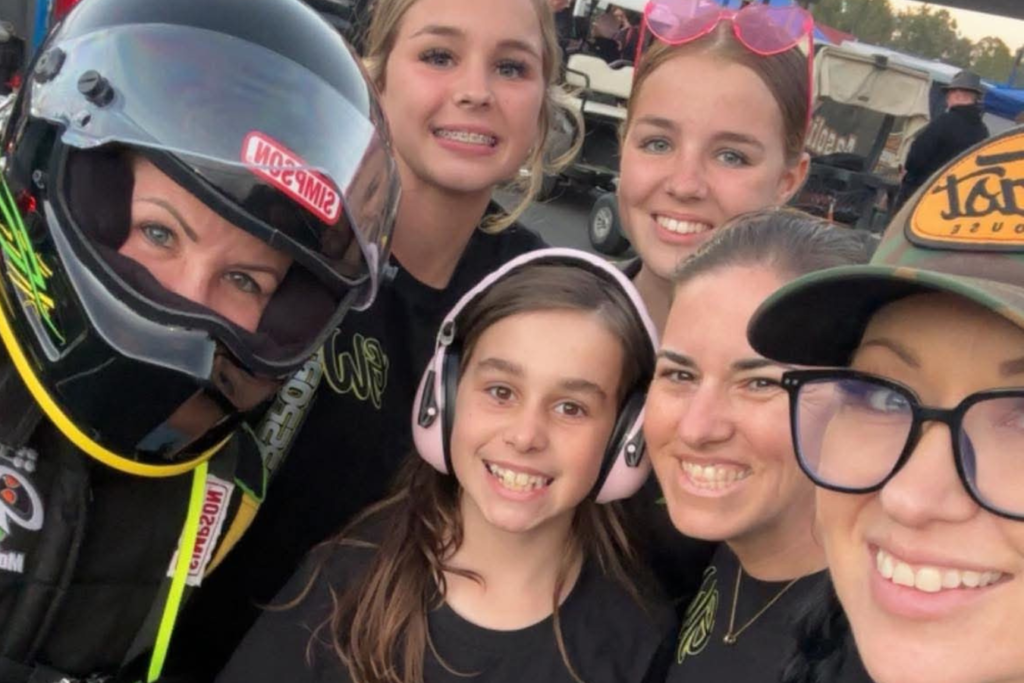 Today, Sally returns to a life that appears remarkably normal.
By weekday, she works as a teacher aide.
By weekend, she straps herself into a supercharged dragster capable of exceeding 300 kilometres per hour.
The contrast doesn’t bother her.
If anything, it suits her.
The race car doesn’t define who she is.
It simply reveals another part of her.
One that never really disappeared.
Only waited.
Waiting, as it turns out, can sometimes be worthwhile.
When asked about future goals, Sally doesn’t speak like someone content to retire on a single achievement.
The Winternationals may have exceeded every dream she once held, but new possibilities have emerged.
“I’ve already achieved more than I ever dreamt of, so now setting my sights higher.”
It’s an intriguing statement from someone who almost turned around before reaching the front gate.
Then again, perhaps that’s the lesson hidden within her story.
Sometimes the thing standing between a person and their next chapter isn’t a lack of ability.
It’s the belief that the chapter has already been written.
For nearly twenty years, Sally Watts wasn’t the driver.
She was everything else.
Then she climbed back into the seat.
And discovered she still belonged there.


What’s your why? Whether you’re a racer, behind the camera, on the tools, or the loudest cheerleader, we want to hear your story! Share with us your passion and motivation to inspire others. Submit your story: https://bit.ly/4aYoxO4