

There’s a tendency in motorsport to focus on what’s visible—the car, the driver, the line, the result. But beneath every braking zone, every apex, and every launch is something far less talked about, yet equally critical: the surface itself.
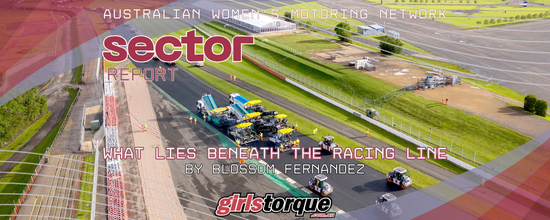
A race circuit is still, at its core, a pavement. But that’s where the similarity with public roads begins to diverge.
As civil engineer Kyle Furness explains:
“A race circuit is still a pavement, but the design priority shifts.”
On a highway, the dominant forces are predictable—vertical loads, distributed across lanes, managed over time. Durability, moisture resistance, and whole-of-life cost tend to govern design decisions.
On a race track, the equation shifts entirely.
What sits beneath the tyres must withstand not just load, but violence—heavy braking, aggressive cornering, and repeated lateral shear concentrated along a narrow racing line. The surface is no longer just supporting vehicles; it is actively participating in performance.

Shear Over Load
The most fundamental difference between road and circuit design is what ultimately governs failure.
Highways are built around vertical load accumulation—traffic volume, axle weight, and environmental exposure. Race tracks, by contrast, are governed by shear.
Under braking and cornering, tyres generate enormous horizontal forces. These forces are applied repeatedly in the same locations—corner entry, apex, and exit—creating highly localised stress zones.
As Furness puts it:
“For circuits, I would place far more emphasis on surface stability under shear and predictable friction behaviour, not just conventional axle-load resistance.”
To cope with this, circuit surfaces prioritise:
- aggregate strength and resistance to polishing
- tight gradation control
- stable binder systems at elevated temperatures
- strong interlayer bonding between pavement layers
Where a highway mix might be optimised for cost and longevity, a circuit mix is engineered for stability under stress and predictability under load.
Where Grip Actually Lives
For drivers, grip is everything—and it lives in the top millimetres of the surface.
The wearing course governs the interaction between tyre and track through:
- macrotexture (surface roughness affecting water dispersion and contact)
- microtexture (fine-scale roughness influencing friction at the tyre interface)
- aggregate exposure and resistance to polishing
But grip is not just about the surface itself—it’s about how that surface behaves under load.
A high-quality top layer can still fail if:
- it shifts under braking
- it debonds from the layer beneath
- it deforms under repeated shear
Which is why, in practice, the system matters more than the layer alone:
“The wearing course is the most critical layer… but the wearing course plus its bond to the layer beneath is the critical system.”
Lose that integrity, and grip becomes inconsistent—arguably one of the most dangerous outcomes in a racing environment.

Heat: The Pressure Test
Unlike public roads, race tracks experience intense, localised heat cycles.
Under braking, tyre friction can drive surface temperatures up rapidly, particularly along the racing line. These repeated heat spikes accelerate binder ageing and oxidation, gradually stiffening the material and reducing its ability to:
- adhere effectively
- resist cracking
- maintain flexibility under load
Furness notes that while overall traffic volume may be low, the conditions are anything but mild:
“You have repeated localised heat spikes in braking zones and on the racing line… so I would expect more severe local ageing gradients than on an ordinary public road.”
The result is a track that may remain structurally sound, but begins to behave differently—particularly in high-demand zones.
Rethinking “Light Traffic”
In traditional road design, low traffic volume often equates to lower risk.
On a circuit, that assumption doesn’t hold.
Traffic may be light in number, but it is:
- highly concentrated
- highly repetitive
- operating at the limits of grip
As Furness puts it plainly:
“I would not use ‘light traffic’ as a comfort blanket on a circuit.”
Rutting risk becomes less about total vehicles and more about:
- contact stress
- temperature
- material stability
- and critically, channelisation along the racing line
The same strip of asphalt is asked to perform, repeatedly, under extreme conditions.
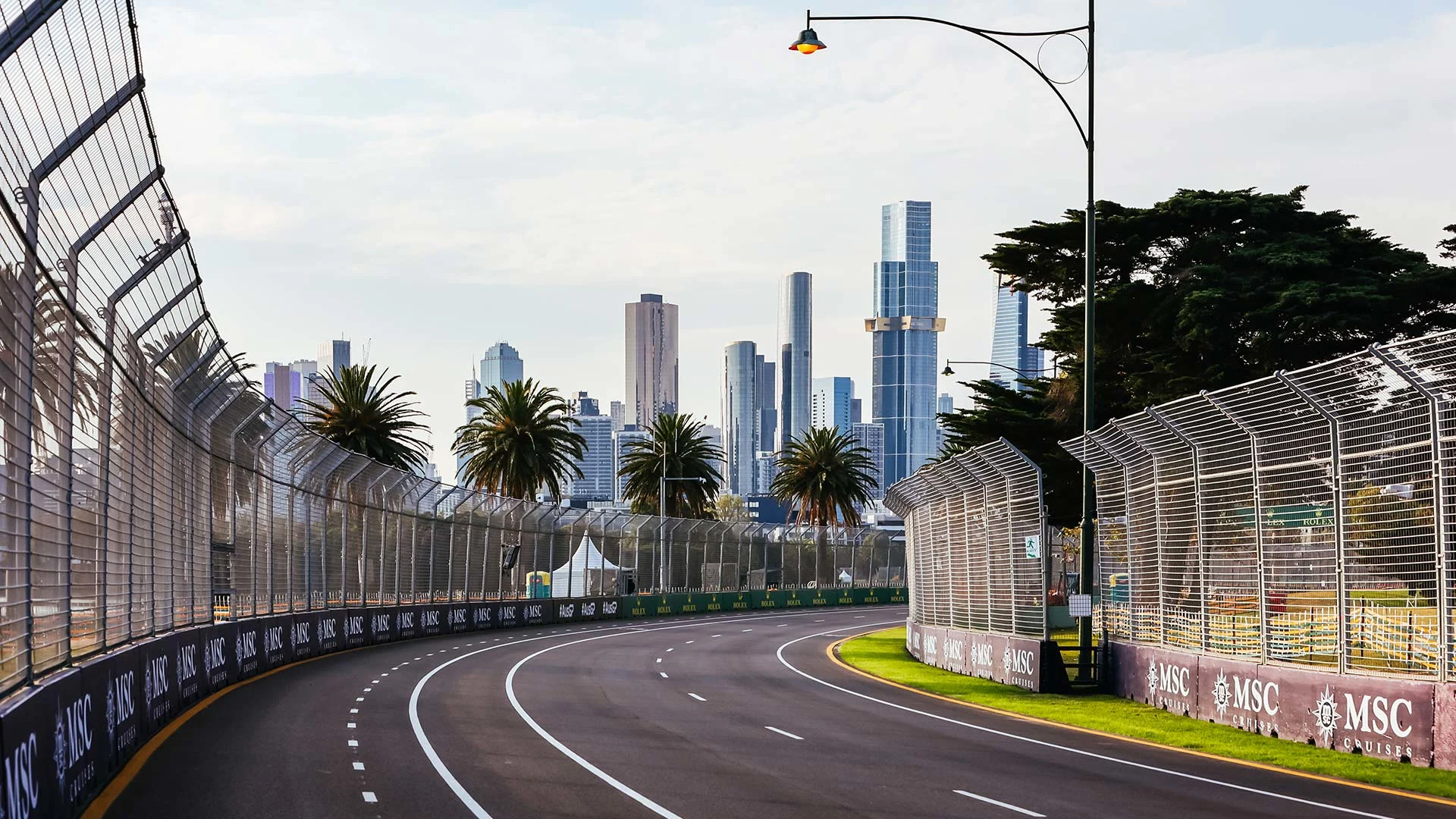
Why Circuits Resurface Early
Perhaps the clearest distinction between roads and race tracks lies in when intervention occurs.
Highway resurfacing is typically triggered by:
- structural degradation
- ride quality
- waterproofing performance
Race circuits operate to a different threshold entirely.
A track may be resurfaced not because it has failed structurally, but because it has lost:
- grip consistency
- surface predictability
- competitive integrity
As Furness explains:
“A race circuit is much more likely to resurface because of grip inconsistency… not merely that the pavement has reached a conventional structural intervention threshold.”
In motorsport, a surface that behaves inconsistently—even if technically “intact”—is no longer fit for purpose.
The Same Science, Different Priorities
It’s easy to think of race tracks and roads as fundamentally different systems. In reality, they are built on the same engineering principles.
What changes is not the science—but the priorities.
Highways are governed by:
- vertical load accumulation
- durability
- asset economics
Race tracks are governed by:
- shear forces
- thermal behaviour
- friction consistency
- and performance predictability along the racing line
Or, as Furness neatly summarises:
“It’s the same pavement mechanics, but the governing distress modes and intervention triggers change.”
Understanding this shift reframes how we look at motorsport infrastructure—not as a passive surface, but as an engineered system that directly shapes performance, safety, and competition.


Blossom Fernandez is an automotive engineer specialising in electric vehicle systems and standards. She contributes to EV standards committees and supports emerging engineers through mentoring and STEM engagement. Blossom is a relentless learner committed to growth, challenge, and constant evolution.