

The future of the automotive industry will not be shaped solely by the technologies we adopt or the vehicles we build. It will also be shaped by the people entering the trade — and the environments they encounter once they arrive.
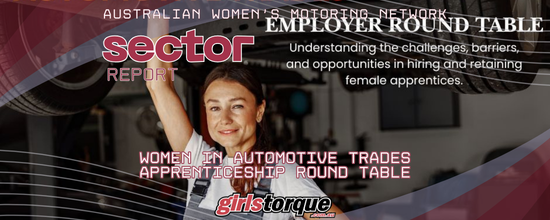
This was the premise behind the Women in Automotive Trades Apprenticeship Round Table, hosted online by the Motor Trades Association of Queensland (MTAQ) through its Women in Trades Apprenticeship Mentoring Program (WITAMP).
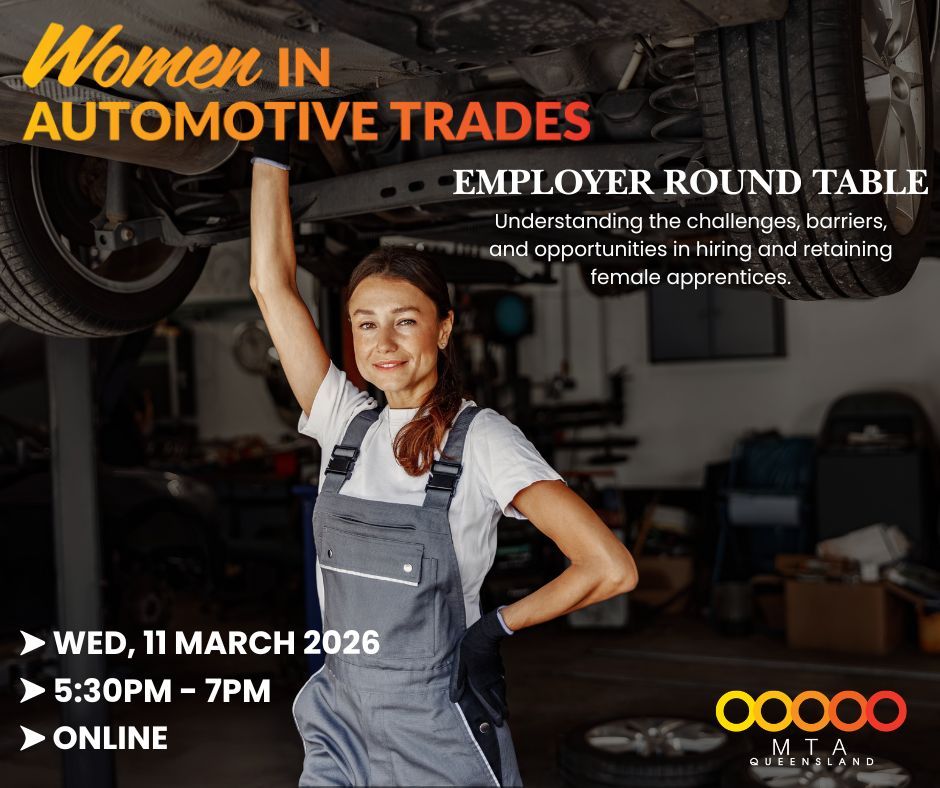
The session brought together employers, trainers, industry stakeholders and women working within the trade to explore a question that has been gaining momentum across the sector: not simply how to recruit female apprentices, but how to retain them.
The round table followed an earlier session and aimed to build on insights already shared by employers, with a deeper focus on workplace culture, retention and practical strategies that support long-term success for women entering automotive trades.
From recruitment to retention
Historically, many industry conversations about women in automotive trades have focused on visibility and recruitment. Campaigns and outreach efforts have sought to demonstrate that women can and do succeed in technical roles, encouraging more young women to consider the trade as a career path.
The framing of this round table suggested a shift in that discussion.
Rather than focusing exclusively on attracting women to the industry, participants explored the conditions apprentices encounter once they begin working in workshops and training environments. This included discussions about workplace culture, support structures and the factors that influence whether apprentices remain in the trade long enough to establish their careers.
The emphasis on retention reflects a broader understanding emerging across the industry: recruitment alone does not guarantee long-term participation.
Hearing from those in the trade
One of the strengths of the round table format was the opportunity for women currently working within the industry to respond directly to the questions being posed.
Throughout the discussion, several participants shared experiences from their time working or training within automotive workshops. While individual experiences varied, hearing similar themes emerge from multiple contributors reinforced that some of the challenges discussed were not isolated incidents but shared realities.
When experiences echoed across participants, it helped ground the conversation in lived workplace contexts rather than abstract policy discussions.
At the same time, the tone of the discussion remained constructive. Participants engaged with one another respectfully, and differing viewpoints were explored openly throughout the session.
Respectful disagreement and complex questions
Several topics generated thoughtful and sometimes differing perspectives among participants.
One example was the discussion around recruitment approaches, particularly the language used in job advertisements intended to attract more women to the trade.
Many employers currently include statements such as “women are encouraged to apply” in recruitment advertisements. During the round table, some participants suggested that broader wording may communicate inclusion while avoiding unintended perceptions that a role is being reserved for a particular demographic.
An alternative phrasing raised during discussion was along the lines of:
“[Employer name] is an equal opportunities employer and encourages persons identifying as minorities to apply for this role.”
For some contributors, the distinction was important. While initiatives designed to encourage participation are widely supported, perceptions around merit and workplace credibility remain important considerations for those entering male-dominated fields.
The discussion highlighted how even small details in recruitment messaging can shape how inclusion initiatives are interpreted by both applicants and existing staff.
The quota conversation
The topic of quotas also prompted thoughtful debate during the round table.
Some participants expressed concern that quota-based approaches could unintentionally lead to perceptions that women were selected to meet targets rather than based on capability.
Others noted that structural barriers and unconscious bias have historically influenced hiring practices, and that deliberate interventions may sometimes be necessary to create more balanced opportunities.
The discussion did not seek to resolve the question definitively, but it illustrated the complexity of balancing representation, fairness and perception within workforce development strategies.
Importantly, the exchange of views remained respectful, reflecting a shared interest in improving outcomes even when perspectives differed.
Understanding why apprentices leave
Another theme raised during the discussion was the need for deeper insight into why apprentices leave the trade.
While national apprenticeship data provides information about participation and completion rates, it does not always capture the nuanced reasons individuals decide to exit an industry. Participants noted that understanding these motivations — including whether experiences differ between men and women — could help employers and industry bodies better address retention challenges.
Some contributors suggested that surveys or further research may help shed light on these questions and support more informed policy or workplace initiatives in the future.
Industry leadership and open dialogue
The round table itself reflected a willingness within the industry to engage with complex workforce questions.
By convening employers, practitioners and stakeholders in an open discussion format, MTAQ created a space for experiences and perspectives to be shared directly. The conversation demonstrated that industry leaders are actively seeking feedback from those working within the trade as part of ongoing workforce development efforts.
Programs such as WITAMP and related initiatives supporting women in automotive trades indicate a broader commitment to strengthening participation and retention across the sector.
The challenge moving forward will be translating insights from discussions like these into practical workplace improvements.
Looking ahead
Insights gathered through the round table discussions will contribute to a forthcoming report being prepared by the Motor Trades Association of Queensland.
That report is expected to synthesise feedback from participants and help inform future industry initiatives aimed at supporting women entering and progressing within automotive trades.
As observers and participants in the discussion, we look forward to reading and interpreting those findings once they are released.
The future of the automotive workforce will ultimately be shaped not only by policies and programs, but by the people willing to contribute their perspectives to conversations like this.
For women working within the trade, participating in industry discussions offers an opportunity to help shape the conditions that future apprentices will experience.
Those interested in contributing to future sessions can follow MTA Queensland on LinkedIn or visit the organisation’s website for updates and registration links to upcoming Women in Automotive Trades Apprenticeship Round Table discussions.
Change in any industry takes time. Conversations like this one represent an important step in understanding the challenges — and opportunities — ahead.

Bridget Bell is a seasoned motorsport media professional and a skilled mechanic, with over a decade of experience in On-Air Hosting, Event Hosting, Television Presenting and Commentating. Passionate about supporting women in both the industry and motorsport, Bridget volunteers as a mentor and actively champions female representation.
Disclaimer: While due research has been conducted, the views expressed in our articles are those of the author and may not necessarily reflect everyone’s views. If you notice an error, please email quoting the blog article title and an explanation of the error.