

Exploring resilience, inclusion, and the pathways to destigmatising mental health in a changing motorsport culture.
The Sound of Silence
In the high-octane world of motorsport, silence can be deafening. Behind the roar of engines and the precision of competition, conversations about mental health are often left unspoken — particularly in male-dominated environments where toughness is worn as both armour and expectation.
For women navigating these spaces as drivers, engineers, mechanics, or media professionals, that silence carries a unique weight.
The Hidden Cost of “Toughness”
A 2024 perspective paper on Formula One revealed that even at the sport’s pinnacle, stigma surrounding mental health persists. Male athletes are often discouraged from expressing vulnerability, while women contend with an additional layer of gender bias — balancing the pressure to perform with the need to be “accepted” in a culture that still equates emotional control with competence.
Elite athletes across all sports face elevated risks of anxiety, depression, and burnout due to performance pressures, weight regulation, travel demands, and public scrutiny. Yet these symptoms are often hidden, masked by the long-standing glorification of endurance and stoicism at any cost. In motorsport, where marginal gains can determine success or failure, this can create a dangerous illusion: that mental strength means never faltering.
“When it comes to mental health, the most powerful thing we can do isn’t to ‘fix’ the problem, it’s to truly hear the person,” says Anita Steger, counsellor and AWMN contributor. “Too often, we rush to give solutions when what’s really needed is understanding. There is still shame and embarrassment around seeking professional help, but getting support, whether through seeing a psychologist or taking medication, isn’t the easy way out. It’s like motorsport: every driver has a whole team behind them, each playing a role in performance and safety. Mental health is the same — there are different tools and people who help us perform at our best. The key is knowing when to reach out and who to call in. What’s important is knowing that you don’t have to do it alone.”
Her analogy perfectly captures how psychological care mirrors the teamwork that underpins racing itself — no one crosses the finish line alone.
Gender-Sensitive Mental Health Support
Research shows that women in traditionally male sporting environments often encounter barriers such as reduced visibility, stereotypes, and a lack of tailored mental health resources. While programmes like the F1 Academy have improved representation, few address the psychological realities of women competing or working in environments built around male norms.
In other words, resilience cannot thrive in cultures that deny emotional reality. Empowering women in motorsport requires treating mental wellbeing not as a measure of weakness but as a performance tool — equally vital as reaction time or mechanical precision.
Learning from Drag Racing’s Culture of Parity
Among all motorsport disciplines, drag racing stands out as a global leader in gender parity. Unlike most forms of elite racing, men and women compete directly on equal terms — same distance, same rules, same trophies.
In 2024, the NHRA celebrated its 100th female event winner, a milestone that speaks volumes about the sport’s longstanding inclusivity. Trailblazers such as Shirley Muldowney challenged licensing barriers in the 1960s and 70s, proving that women could match men in both reaction and resolve. Today, figures like Erica Enders and Brittany Force continue that legacy, breaking records and claiming championships without gender categories. Their visibility helps normalise female participation, setting a cultural tone where success is measured by skill, not stereotype.
Australia mirrors this trend. Local champions including Lisa Gregorini, Rachelle Splatt, and Kelly Bettes have shown that women can and do succeed at the sport’s highest levels. Gregorini’s all-female Top Doorslammer team, Splatt’s record as the first woman to exceed 300 mph in a Top Fuel dragster, and Bettes’s national championship all stand as powerful examples of representation and resilience.
Grassroots accessibility — from Junior Dragster programmes to inclusive licensing under IHRA Australia and ANDRA — has helped foster participation. The culture at the track is often described as family-oriented and collaborative, breaking down the elitism that excludes many women from other forms of motorsport.
Culture, Accessibility, and Respect
Recent research from More than Equal identifies six core themes underpinning drag racing’s gender inclusivity:
-
Normalised female participation
-
Pioneering advocates
-
Visible role models
-
Cultural accessibility
-
Technical respect
-
Supportive organisational structures
These same factors also support mental wellbeing. When women are represented, respected, and visible in their sport, stigma loses its footing. Where the paddock becomes a space for collaboration rather than competition of identity, it becomes safer for all — emotionally and psychologically.
This suggests that parity and mental health are deeply interconnected: when inclusion is normalised, self-censorship diminishes, and open conversations become part of the culture.
Shifting the Culture: From Silence to Support
So how do we translate these lessons across motorsport disciplines?
Evidence-based strategies point to several practical steps:
-
Normalise the conversation. When respected drivers, engineers, and officials speak openly about their experiences with stress or mental health, it dismantles stigma and models healthy behaviour.
-
Build mental health literacy. Training for coaches, team managers, and scrutineers on recognising and responding to signs of distress allows earlier intervention and better support.
-
Integrate psychological care. Embedding mental health practitioners within teams or national bodies ensures wellbeing is treated as integral to performance.
-
Champion gender-sensitive initiatives. Tailor resources that reflect women’s lived experiences — from balancing family pressures to navigating harassment or self-doubt.
-
Lead from the top. Organisations that speak openly about wellbeing, allocate funding for support, and celebrate vulnerability as strength will create lasting change.
“In any high-performance team, psychological safety starts with trust and communication,” says Steger. “People need to feel they can speak openly about what’s going on — whether it’s a mechanical issue or a mental one. That’s something Dr Kotryna Lewis and I talked about in our interview: when people feel safe to talk, teams perform better. Every person, from the driver to the pit crew, experiences pressure differently, so the structures and support systems have to adapt to each individual. Creating that kind of culture doesn’t just protect wellbeing; it helps everyone do their best work.”
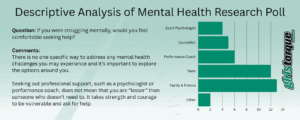 Her perspective underlines what motorsport psychology research is beginning to confirm: teams that foster trust and empathy often outperform those that rely solely on discipline and hierarchy. In an industry defined by fractions of a second, safety isn’t just physical — it’s psychological.
What Real Change Looks Like
Real change, Steger notes, begins when openness replaces silence.
“Talking about mental health, admitting you’re struggling, or asking for help — that’s not a lack of resilience, that’s courage. A bad weekend on track doesn’t make someone mentally weak, and seeking professional support doesn’t mean they’re any less tough. Silence doesn’t equal strength; honesty does. When we normalise those conversations, we make it clear that being human is part of being an athlete — and that’s where true strength comes from.”
Her words echo the sentiment that is reshaping conversations across motorsport and industry alike: authenticity fuels performance.
Beyond the Track: Lessons for Industry
The same principles apply across male-dominated trades and technical fields. Whether it’s a workshop, pit lane, or boardroom, cultures that prize toughness over truth breed burnout. By contrast, environments that value both performance and personhood — as seen increasingly in Australian drag racing — foster resilience and retention.
 Drag racing’s inclusive model offers a glimpse of what motorsport could look like at its best: competitive yet compassionate, fast-paced yet psychologically safe. It shows that gender equity and mental wellbeing are not separate battles but shared goals, each strengthening the other.
Driving the Conversation Forward
The Australian Women’s Motoring Network (AWMN) is conducting an on-going national Mental Health Study to better understand how women in automotive and motorsport experience stress, support, and resilience.
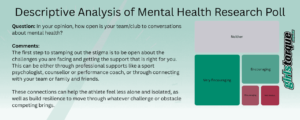 Your anonymous input will help shape future programmes, advocacy efforts, and wellbeing initiatives tailored to our community’s needs.
👉 Share your experience: participate at mental-health-survey
Your voice helps drive the cultural shift our industry needs.
References
[1] More than Equal Research, 2024 – Gender Equality in Drag Racing
[2] Motorsport Week, 2024 – Drag Racing’s Blueprint for Gender Parity
[3] Frontiers in Psychology, 2021 – Reducing Stigma in Sport
[4] Forbes, 2025 – NHRA Initiatives for Women in Motorsport
[5] PubMed 39450120 – Mental Health in Elite Motorsport
[6] Thomas A. Buck PhD Thesis, 2023
[7] FIA Women in Motorsport Mentorship Programme, 2025
[8] Drag News Australia, 2024 – Women Leading the Track
About the Contributor
Anita Steger is a mental health professional and passionate motorsport enthusiast with a Bachelor of Psychological Science (Honours) and experience in suicide prevention, and alcohol and other drugs. Combining her expertise with a love of motorsport, she is researching the wellbeing and resilience of female athletes, highlighting the human side of sport. Anita joined the AWMN contributor team through our 2025 Mental Health Project volunteer call-out, serving as our in-house expert bringing vital perspective to the conversation on mental health and performance in high-pressure environments.

Bridget Bell is a seasoned motorsport media professional and a skilled mechanic, with over a decade of experience in On-Air Hosting, Event Hosting, Television Presenting and Commentating. Passionate about supporting women in both the industry and motorsport, Bridget volunteers as a mentor and actively champions female representation.
Disclaimer: While due research has been conducted, the views expressed in our articles are those of the author and may not necessarily reflect everyone’s views. If you notice an error, please email quoting the blog article title and an explanation of the error.