

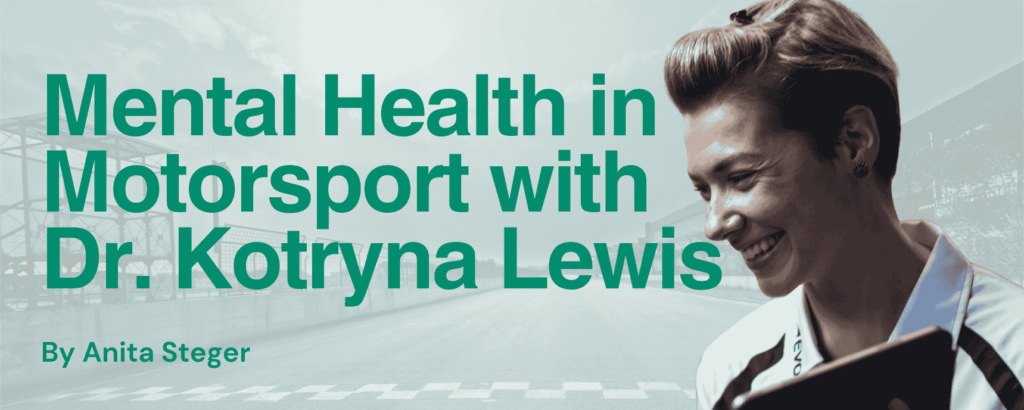
Mental Health in Motorsport with Dr Kotryna Lewis
When McLaren’s Lando Norris spoke openly about his mental health, some critics labelled him “mentally weak” or “whiny.” Meanwhile, his championship rival Oscar Piastri has been praised for his calmness and composure — despite admitting he too feels the pressure both on and off the track.
The mixed responses show how divided sport can still be when it comes to talking about mental health. For some, honesty is seen as a weakness. For others, it’s a refreshing sign of strength and a reminder that athletes are human too.
But behind every headline, there are deeper stories of performance, pressure, and resilience. To explore these, we spoke with Dr Kotryna Lewis, a performance psychology consultant with Focus Driver Performance, who has worked with drivers across categories and countries, and with organisations like the W Series.
Embracing Opportunities
Dr Lewis laughs when she recalls that she used to hate Formula 1.
“My dad always had it on, so I thought it was boring. But once I studied performance psychology and started working with drivers, I realised just how much is going on behind the scenes. I began to love it — not just the racing, but the psychology and human performance that drive it.”
Her path into motorsport wasn’t planned. She said “yes” to opportunities, from helping with the FIA Institute Young Driver Excellence Academy in Edinburgh, UK, to working with young drivers — and soon became the go-to person for performance psychology support.
“I was there to do psychology, not to know every technical detail of racing. But I learned so much from the drivers and the culture of motorsport itself.”
The Unique Pressures of Motorsport
Unlike sports where athletes can train daily in the gym or on the field, practice in motorsport is limited, expensive, and often restricted by regulations. Much of a driver’s preparation happens away from the track — working on focus, managing nerves, and building mental skills for qualifying and race day.
Qualifying, Dr Lewis explains, is one of the most stressful parts of a weekend:
“Drivers put enormous expectations on themselves, and the outcome sets the tone for the race. Mistakes can be hard to recover from, especially for younger drivers trying to prove something to themselves — or to others.”
And then there’s the heat, the fatigue, the media spotlight, and the pressure of representing not just themselves but also their teams, sponsors, and families. As Dr Lewis points out, motorsport is never just about the driver and the car — it’s a team effort, and every result has ripple effects.
The Role of Communication in Motorsport
For Dr Lewis, communication isn’t just a “soft skill” — it’s a performance tool. Motorsport is rarely about the driver alone; every lap can depend on how effectively information flows between drivers, engineers, coaches, and sometimes even parents. Miscommunication can mean wasted time, poor adjustments, or heightened stress.
She explains that part of her role is helping drivers not only express themselves clearly but also listen effectively. The ability to share what they’re feeling — whether it’s fatigue, confidence, or confusion — allows engineers and coaches to make better decisions. Just as importantly, hearing feedback without defensiveness can strengthen trust and streamline collaboration.
By making communication intentional, Dr Lewis says, drivers build stronger relationships within their teams and reduce avoidable friction. That, in turn, frees up mental space to focus on performance where it matters most: on track.
Breaking Misconceptions About Psychology
One common myth is that seeing a psychologist means something is “wrong.” Dr Lewis is quick to challenge this:
“Clinical psychology waits until you’re really struggling and helps bring you back to normal. Performance psychology, on the other hand, focuses on helping you feel and perform even better — before things reach a crisis. You don’t need to wait until it’s bad to benefit.”
Sometimes, a single session can make a huge difference. Other times, drivers may need longer-term support. It depends on their journey, their age, and their environment. And often, Dr Lewis isn’t just supporting drivers — she’s helping engineers, parents, or entire teams communicate better.
Why Openness Matters
For athletes — especially in motorsport where opportunities are scarce and expectations sky-high — admitting to nerves, stress, or doubts can feel risky. But Dr Lewis sees courage in that honesty:
“Drivers often come in saying, ‘This sounds silly, but…’ It’s not silly. Sharing those thoughts is part of building resilience and trust. It’s about learning strategies that make the pressure manageable.”
She also stresses that no two drivers — or people — need the same approach. Flexibility is key.
“My role is to be an emotional sponge, to really listen, and to adapt strategies to fit the context of motorsport.”
A Message for Fans, Athletes, and Volunteers
Mental health in motorsport isn’t just a driver’s issue — it’s a human issue. From athletes juggling careers and sponsors to volunteers keeping events running, everyone feels pressure in different ways. And seeking support doesn’t mean you’re weak; it means you’re investing in yourself and those around you.
As fans, we can play our part too. Instead of questioning a driver’s “mental strength,” we can admire their openness, just as we admire their skill behind the wheel. After all, resilience isn’t about never struggling — it’s about finding ways to navigate the challenges and keep moving forward.
Dr Kotryna Lewis sums it up simply:
“I feel privileged to be trusted with what drivers are going through.”
This Mental Health Month, let’s celebrate that message — because in motorsport, just like in life, strength comes in many forms. It’s not just about racing fast — it’s about being human, and learning how to thrive under pressure.


Anita Steger is a mental health professional with a Bachelor of Psychological Science (Honours) and a background in suicide prevention and alcohol and other drugs. With a strong interest in the resilience and motivation of athletes, she has combined her expertise with her passion for motorsport through research into the wellbeing of female athletes. Her work reflects a commitment to supporting mental health and highlighting the human side of sport.