

Why Doing Less is the Key to Sustainable Success

Because constantly pushing harder doesn’t prove your worth—it risks your wellbeing.
“Just lean in.”
You’ve heard it before—probably too many times. It’s been hailed as the blueprint for women in male-dominated spaces: speak up, show up, do more. Work harder. Be more assertive. Outperform the competition. Prove you belong. Sheryl Sandberg even wrote a best selling book about it, Lean In.
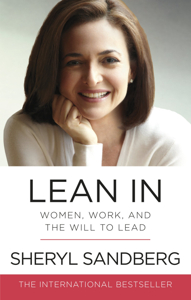
But here’s the problem: Leaning in often turns into leaning too far. It asks women to contort themselves to fit environments that were never designed with them in mind. It demands more energy, more perfection, and more resilience—without ever changing the system that created the imbalance in the first place.
And for those of us in motorsport, on the workshop floor, in trades, or across any other high-performance industry—the consequences aren’t just theoretical. They’re lived. They’re physical. They’re burnout, injury, mental exhaustion, and the creeping realisation that success shouldn’t cost this much.
It’s time to debunk the myth.
Leaning In Is a Mask
The “lean in” narrative is based on the idea that success is available to everyone—if you just work hard enough for it. It offers a kind of non-threatening feminism. But what it often translates to is code-switching: adapting your language, appearance, behaviour, even humour to align with the dominant culture. In male-dominated workplaces, this means dimming your authenticity just to fit in.
And here’s the thing about putting on an act: it’s exhausting.
It’s not just a psychological load; it’s a cognitive one. Studies show that masking requires more mental energy, leaving fewer resources for creativity, focus, or long-term planning. You’re not just doing your job—you’re managing how you’re perceived, second-guessing your instincts, and constantly calculating risk.
Leaning in can become a full-time performance. And if you’re too busy performing, when are you supposed to do your best thinking?
What Happens When You’re Always at 100%?
One of the most common pieces of advice I give to my mentees is this: You can’t sprint a marathon.
If you’re operating at 100% every day, it might look impressive from the outside. You might even convince yourself it’s sustainable—until it isn’t. Fatigue creeps in. The quality of your work dips. You miss details. You start to resent the very thing you used to love.
Then comes the fallout. Missed deadlines. Mistakes. Reputation damage. Health issues.
Meanwhile, those who’ve been operating at a solid, sustainable 80%? They’re still moving. Still growing. Still reliable. And most importantly—they’re still in the game.
Why 80% Is the Sweet Spot
Sustainable output > inconsistent brilliance.
An 80% baseline gives you something that’s underrated but incredibly valuable: predictability. If you’re on the workshop floor, in a pit crew, or managing a motorsport team, reliability is everything. No one wants a superstar who crashes after three good laps. They want someone who can lock in—again and again.
Consistently operating at 80% means you’ve got something left in the tank. You can surge when needed. Dig deep when the pressure’s on. Push when it matters. And when the sprint ends, you return to your base. You reset. You recover.
This isn’t slacking. This is strategy.
Doing Less Doesn’t Mean Being Lazy
Let’s clear something up. “Doing less” doesn’t mean doing nothing. It means doing what matters most—and doing it well.
Research consistently supports this:
- Quality over quantity: When workers focus on fewer tasks, the output is more refined, more thoughtful, and more impactful. In trades, this could mean fewer reworks or higher client satisfaction. In motorsport, it could mean improved vehicle performance or safer builds.
- Work expands to fill time (Parkinson’s Law): When you have all day to do something, it’ll take all day. But when your time or energy is limited, you get laser-focused. You prioritise.
- Shorter hours ≠ lower output: Trials in Iceland showed that reducing work hours maintained—or increased—productivity. Employees reported higher wellbeing and greater job satisfaction, too.
- Reduced burnout, increased retention: People who don’t feel chronically overworked are more likely to stay in their roles. This means organisations retain skills, knowledge, and cohesion.
Doing less doesn’t make you weak. It makes you efficient, aware, and—crucially—resilient.
Why the Business Won’t Save You
Let’s be honest: most businesses will take as much as you’re willing to give.
They won’t stop you from working back late. They won’t tell you to take a break. They won’t build boundaries for you. Because while they may care about you as a person, their primary goals are outcomes.
That means you have to be your own steward. Your own maintenance tech.
You have to decide how much you give, when you rest, and how to protect your energy.
Even machines break down.
So how are you any different?
Reputation Isn’t Built on Exhaustion
In the trades and motorsport industries, reputation travels fast—and sticks. How many times have you heard “you’re only as good as your last job”?
But here’s the secret: your reputation isn’t built on how much you grind. It’s built on how well you deliver. People remember who came through, not who came apart.
When you’re consistent, clear, and capable—people take notice. You become the one they trust. The one who delivers. The one they call first.
What I Tell My Mentees
For the women I mentor—especially those entering tough, high-performance industries—here’s what I say:
- Your energy is a resource. Budget it.
- Performing at 80% consistently will outperform 100% sprints, with 30% lulls.
- Unpredictable performance is worse than steady output.
- Don’t wait for the system to give you permission to slow down.
- Protect your health, your brain, your spark. They’re not replaceable.
You are not here to prove you belong. You’re here to do the job and build something that lasts.
And you can’t build it if you’re running on fumes.
Let’s Redefine Success
The real flex? Longevity. Excellence. Balance. Doing work you’re proud of—without sacrificing your sanity.
We don’t need more women who “leaned in” so hard they fell over. We need more women who know how to pace themselves, pick their battles, and protect their glow.
Try not to listen too hard to elitist dogma. Because when you stop trying to do everything, you finally get to do what matters to you.
And that’s when you start to win—on your own terms.
To the next generation coming through: know this isn’t a story about instant gratification. You won’t find success in six months or even two years. You’ll have wins, yes—but the true measure is looking back after years of contribution, growth, and steady impact. Don’t sell yourself short trying to peak early and flame out. Sustainable output isn’t just good strategy—it’s the legacy you’re building.
https://www.businessthink.unsw.edu.au/articles/Why-doing-more-with-less-reduces-productivity

https://leaddev.com/management/you-cant-actually-do-more-less

https://www.linkedin.com/pulse/why-doing-less-well-better-you-your-entity-world-hemin-latif-ph-d-

https://business.talkspace.com/articles/causes-of-low-productivity-at-work

https://www.insidehr.com.au/doing-more-with-less-the-lean-talented-workforce/

https://aspectgroup.com.au/whats-new/overcoming-the-corporate-struggle-of-doing-more-with-less/

https://statily.app/blog/low-employee-productivity/

https://www.tandfonline.com/doi/full/10.1080/15487733.2021.2023292

https://www.sciencedirect.com/science/article/pii/S0921800921000471

https://www.zoho.com/workplace/articles/pareto-principle-80-20-rule.html

https://www.usemotion.com/blog/sustainable-productivity

https://www.thisisyoga.com.au/blog/8-ways-doing-less-can-transform-your-work-life

https://www.sage.com/en-au/blog/creating-culture-working-less-boost-productivity/

https://www.calendar.com/blog/the-counterintuitive-power-of-less-why-working-fewer-hours-can-skyrocket-your-productivity/

https://www.4dayweek.com/news-posts/100-80-100-rule

https://chrisbailey.com/work-less-to-become-more-productive/

https://www.waldenu.edu/programs/business/resource/shortened-work-weeks-what-studies-show

https://blog.allgeo.com/pareto-principle-to-increase-field-productivity

https://www.bamboohr.com/blog/working-less-more-productive

https://www.pc.gov.au/inquiries/completed/productivity/report/productivity-volume2-keys-to-growth.pdf

https://helloleaders.com.au/article/using-the-80-20-rule-to-positively-impact-your-productivity

https://www.linkedin.com/pulse/rethinking-productivity-when-do-more-less-isnt-answer-anna-lundberg-stlhe

https://www.forbes.com/sites/briannawiest/2019/02/20/3-productivity-experts-explain-why-doing-less-actually-accomplishes-more/

https://www.brookings.edu/articles/machines-of-mind-the-case-for-an-ai-powered-productivity-boom/

https://www.stantonchase.com/insights/blog/the-triple-bottom-line-how-sustainability-transforms-employee-behavior

https://www.dallasfed.org/research/economics/2024/0213

https://www.rba.gov.au/publications/bulletin/2024/jul/assessing-potential-output-and-the-output-gap-in-australia.html

https://www.linkedin.com/pulse/shift-sustainable-world-we-need-work-less-differently-lis-dingjan

https://www.reddit.com/r/productivity/comments/14t7fn2/being_productive_means_doing_less/

Bridget Bell is a seasoned motorsport media professional and a skilled mechanic, with over a decade of experience in On-Air Hosting, Event Hosting, Television Presenting and Commentating. Passionate about supporting women in both the industry and motorsport, Bridget volunteers as a mentor and actively champions female representation.
Disclaimer: While due research has been conducted, the views expressed in our articles are those of the author and may not necessarily reflect everyone’s views. If you notice an error, please email quoting the blog article title and an explanation of the error.