

Built on Thousands of Small Decisions
How Maree Parisi combines data, engineering judgement and driver development to unlock performance in Formula 4.
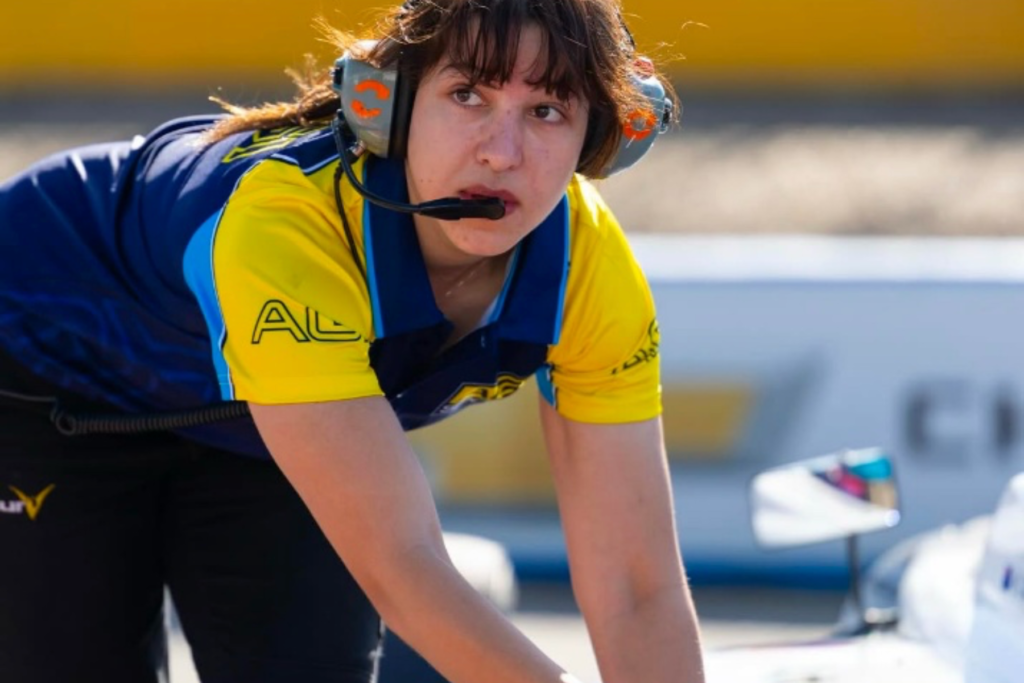
Behind every fast lap sits thousands of decisions.
Some belong to the driver: where to brake, when to pick up the throttle, whether to trust the grip beneath them. Others belong to the engineer, who quietly works in the background interpreting data, reading tyre wear, refining vehicle setup and helping drivers understand where the next tenth of a second can be found.

As a race engineer working across Formula 4, touring cars and driver development programs, Maree Parisi knows that performance is rarely unlocked through one dramatic breakthrough. More often, it comes from understanding how dozens of seemingly small decisions combine to produce a faster, more consistent race car.
Seeing What the Driver Can’t
When reviewing driver performance, Parisi begins with four primary telemetry channels: gear selection, throttle position, brake application and steering angle.
“These are the big four,” she explains. “Small changes in any of them can make significant differences in performance.”
By comparing each session against reference laps, telemetry quickly highlights where time is being won—or lost. If a driver is already setting the benchmark pace, the analysis becomes even more refined, with attention turning to minimum corner speeds, braking points and the subtle differences that separate a good lap from a great one.
Gear selection is often one of the simplest opportunities to find performance.
Parisi points to Corporate Hill at Sydney Motorsport Park, where drivers can choose either fourth or fifth gear through the fast uphill section before braking for the following hairpin.
“Drivers tend to find the car much more stable in fifth gear, even if the engine isn’t quite at the ideal rev range,” she says. “That stability can help set up the braking phase into the following hairpin.”
Yet telemetry is only part of the picture.
The numbers might reveal what happened during a lap, but they rarely explain why.
Reading What the Car Is Telling You
Before spending too long studying data traces, Parisi heads somewhere many people might not expect—the tyres.
“After each session, one of the first things I do is check the tyres, not just pressures but wear patterns and where the runoff is positioned.”
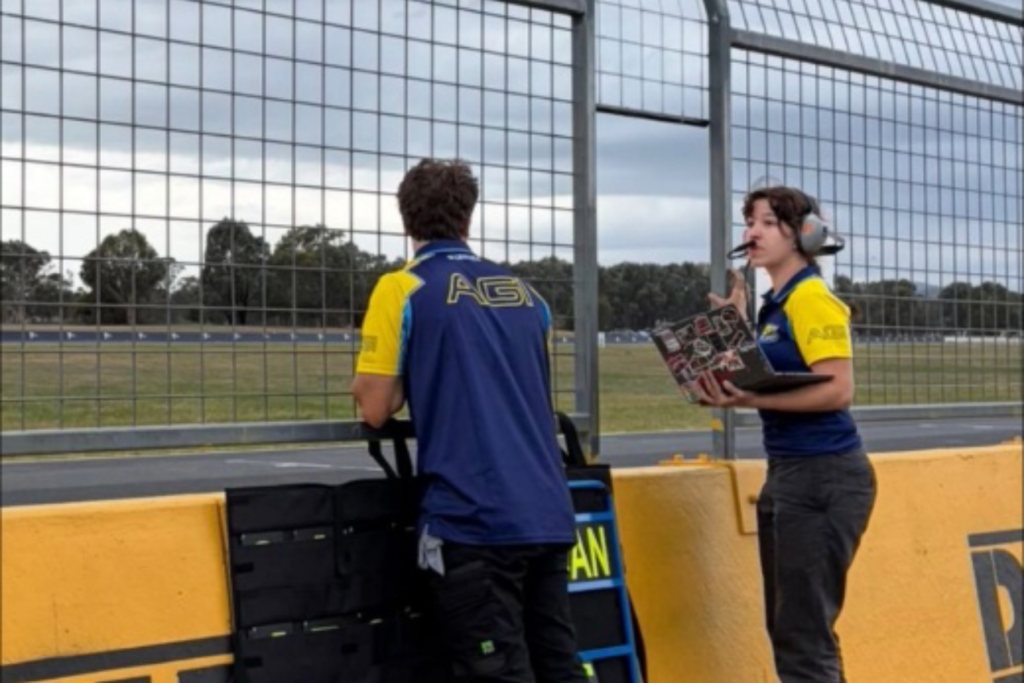 Temperature assessment is equally important. By physically checking both the tyres and the wheel rims, she can quickly determine whether the setup is working effectively and whether the driver is generating sufficient tyre temperature.
“You want the rims to almost burn you and the tyre to have that sticky feel,” she explains.
The tyres often reveal whether a limitation lies in the car, the setup or the driver. Telemetry is then used to validate those observations, building a clearer picture before changes are made.
Rather than relying solely on data or instinct, effective race engineering comes from combining both.
Changing the Variables
Every circuit demands its own solution.
Weather conditions, corner profiles, elevation changes and track surface all influence how a Formula 4 car should be configured.
“A setup that works perfectly at Sydney Motorsport Park won’t necessarily work at The Bend,” Parisi says.
To maintain competitive parity, Formula 4 cars begin each event with a prescribed baseline setup. From there, engineers make targeted adjustments throughout the weekend, refining areas such as rear wing angle, camber and anti-roll bar stiffness to suit the circuit and the driver.
Aerodynamic changes can be particularly influential at high-speed venues.
“The wing angle becomes crucial at tracks like The Bend because of the long straight. A change of only a degree can be the difference between winning and losing.”
With limited track time available, every adjustment becomes a calculated decision. Engineers must weigh the potential performance gain against the risk of upsetting a setup that is already working well.
Turning Information into Understanding
While telemetry provides valuable information, Parisi believes video analysis is often the most effective coaching tool, particularly for developing young drivers.
“One of the easiest ways to get information into a driver’s head is through video footage.”
Drivers first review their own fastest laps before offering a self-assessment. From there, Parisi pauses the footage at key moments, discussing braking points, steering inputs and throttle application.
For many drivers, seeing the mistake creates a stronger understanding than simply reading the data.
“I can show them that braking 50 metres earlier is costing them two tenths of a second, but seeing it on video usually makes a bigger impact.”
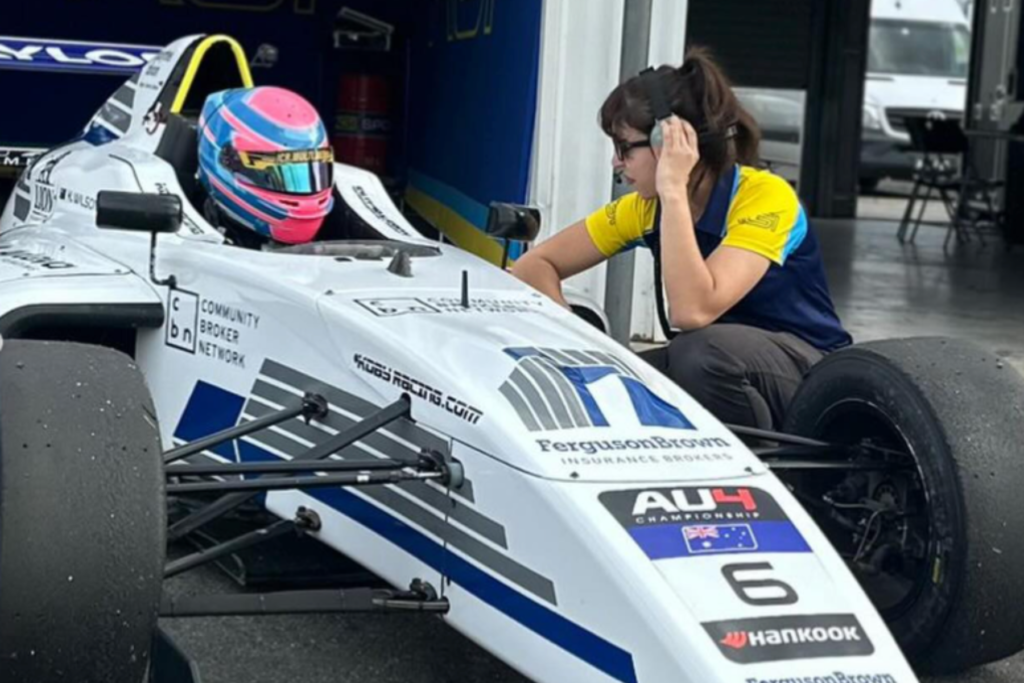 Just as important as the quality of the feedback is the quantity.
“There’s no point overwhelming your driver with information,” she says. “I focus on three main improvements at a time. Once those have been achieved, we move on to the next three.”
The goal isn’t to deliver more information. It’s to improve communication, giving driver and engineer a common understanding of what the car is doing and how to improve it together.
Protecting Performance
Finding speed means little if the car cannot reliably complete the session.
For Parisi, one of Formula 4’s most persistent engineering challenges is temperature management.
“The biggest issue with our cars is overheating.”
The problem often becomes most apparent after a session has finished. Once cars stop in parc fermé, airflow through the side-mounted radiators disappears while engine temperatures continue to rise.
To combat this, cooling fans are installed in the side pods almost immediately after the car comes to a stop.
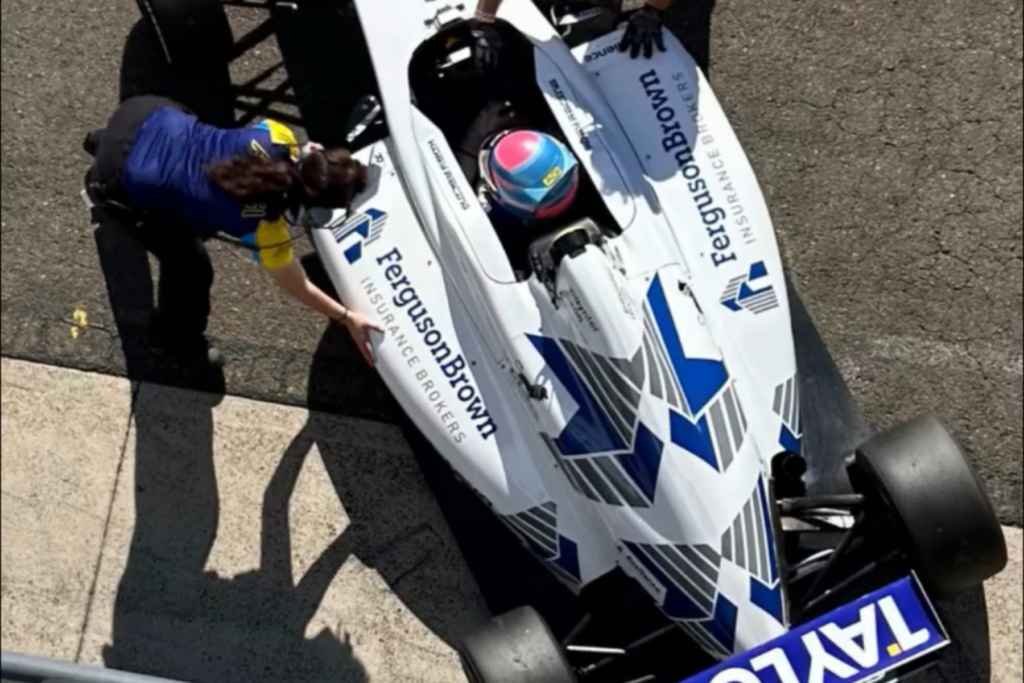 Engineers also review post-session temperature data, monitoring both peak operating temperatures and fluctuations throughout each run.
Cold weather creates its own challenges.
“When it’s extremely cold, the cars sometimes never reach their ideal operating temperatures,” says Parisi. “In those situations, we’ll partially blank off the radiators with tape to help retain heat.”
Performance isn’t simply about making a car faster. It’s about ensuring it can consistently operate within the window where that performance is possible.
The Technology May Change. The Principles Won’t.
As motorsport continues its transition towards hybrid and electric platforms, Parisi believes the core principles of race engineering will remain remarkably consistent.
“I think the skills are extremely transferable,” she says.
Having worked across multiple categories and vehicle types, she sees the same engineering process underpinning every successful race weekend.
“Every car is different and has its own optimal setup, but the foundation of a race weekend is largely the same.”
Electric and hybrid race cars may introduce new technologies and powertrain considerations, but the fundamentals remain unchanged.
“The fundamentals, especially driver performance data, will continue to be important regardless of the technology.”
The Bigger Picture
Motorsport often celebrates spectacular overtakes, daring late-braking manoeuvres and race-winning laps. Yet behind almost every one of those moments sits an accumulation of smaller decisions that most spectators never see.
Telemetry helps engineers understand what happened. Tyres reveal how the car behaved. Setup changes influence what the driver can achieve, while coaching transforms information into action. Together, they create a shared understanding between driver and engineer, allowing both to chase the same goal.
For Maree Parisi, that’s where modern race engineering delivers its greatest advantage.
Fast laps aren’t built on one brilliant decision.
They’re built on thousands of small ones.
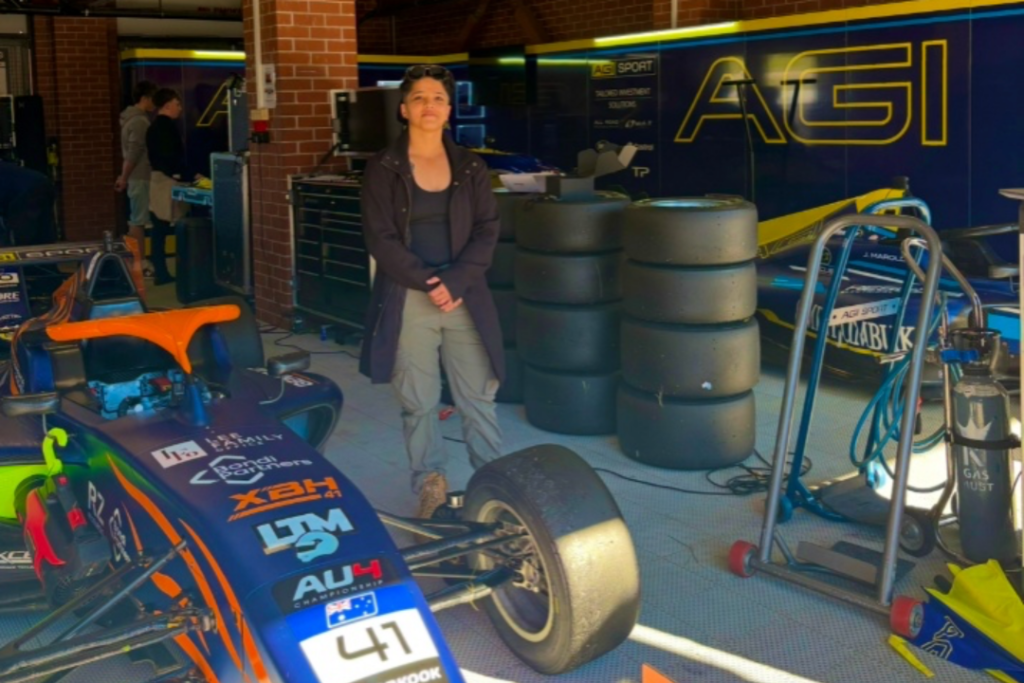
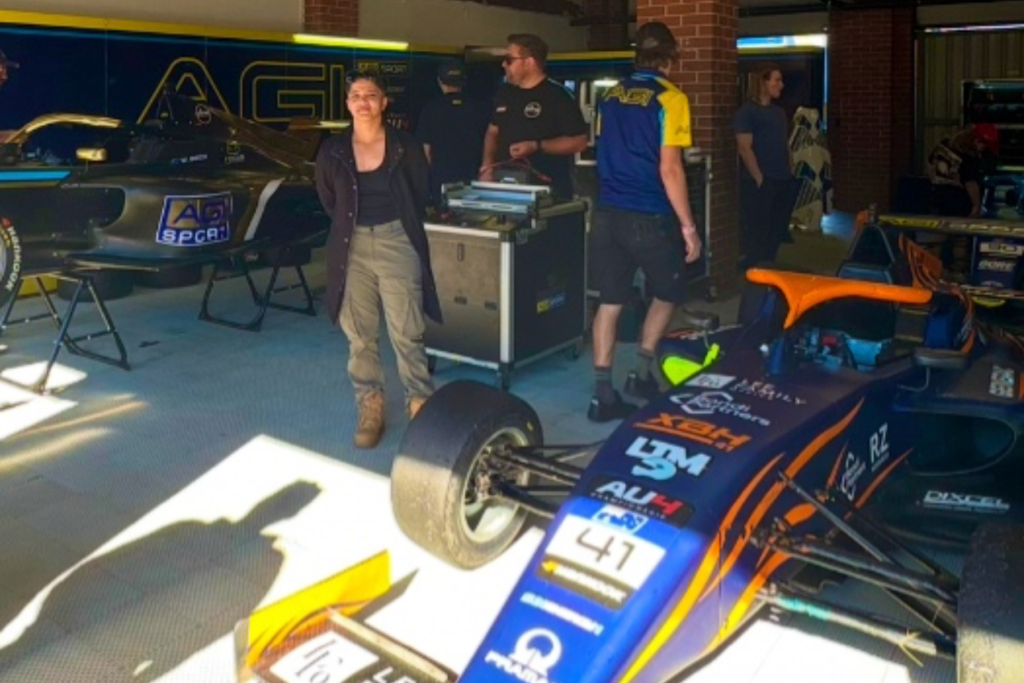


Blossom Fernandez is an automotive engineer specialising in electric vehicle systems and standards. She contributes to EV standards committees and supports emerging engineers through mentoring and STEM engagement. Blossom is a relentless learner committed to growth, challenge, and constant evolution.