

On Her Own Terms
At the entry to a Mackay carpark, just as the sky slips into that brief window of pink dusk, Anna Dutton is already in position.
Perched low, camera in hand, she tracks each car as it rolls in—framing movement against fading light, catching reflections before they disappear entirely. It’s instinctive. Unhurried. The kind of focus that suggests she’s done this countless times, and still hasn’t lost interest in getting it right.
Bright magenta hair, deliberate against the soft wash of evening. Cat-eye glasses resting just above, more punctuation than accessory. There is a composure to her—measured, self-contained—that doesn’t ask for attention, but holds it anyway.
She stays with the lens a little longer—watching.
And capturing.
 Photography, for Anna, didn’t begin in the carpark. It began in a studio—out of necessity rather than intention.
A bridal designer for 27 years, she built her craft in an environment where detail is everything. Every seam, every line, every finish carries weight. These aren’t garments worn lightly; they are worn once, remembered forever. When the images coming back didn’t reflect that level of care, she taught herself to do it properly.
Not as a side interest—but as an extension of standards.
From there, the lens moved. From gowns to cars. From controlled interiors to open, unpredictable light. What started as correction became habit. And habit became presence.
“I always get really excited… this is my social event.”
 The cars themselves were never new.
Before she was born, her parents campaigned a speedway car for 14 years. Childhood unfolded in V8s—school runs in a Charger, weekends at the drags, a steady immersion in noise, motion, and mechanical culture. It wasn’t introduced. It was inherited.
And yet, she didn’t step into racing until her early thirties.
“I don’t know why it took me so long.”
It’s not framed dramatically. There’s no attempt to rewrite it as strategy or timing. Just a quiet acknowledgement—something was always there, and eventually, she chose to embrace it.
 When she did, she kept it simple.
No elaborate pathway. No structured climb. Just test and tune sessions, local events, the occasional no-prep eighth mile. A true street car she can drive to the track and home again. No trailer. No overreach.
“I just do it for fun.”
On a prepped track, the surface is engineered—traction laid down, variables reduced. On no-prep, it’s instinct. Grip becomes a question, not a guarantee. You commit, and you manage what comes back.
But Anna doesn’t approach it with bravado.
“I still get nervous every race… I think that’s a safety net.”
If the car shifts out of shape, she backs off. If something doesn’t feel right, she listens. The outcome of the run is secondary to the condition of both driver and machine.
“I’d rather be in one piece… than put it into a wall.”
There’s no performance in that statement. Just decision-making, grounded in experience.
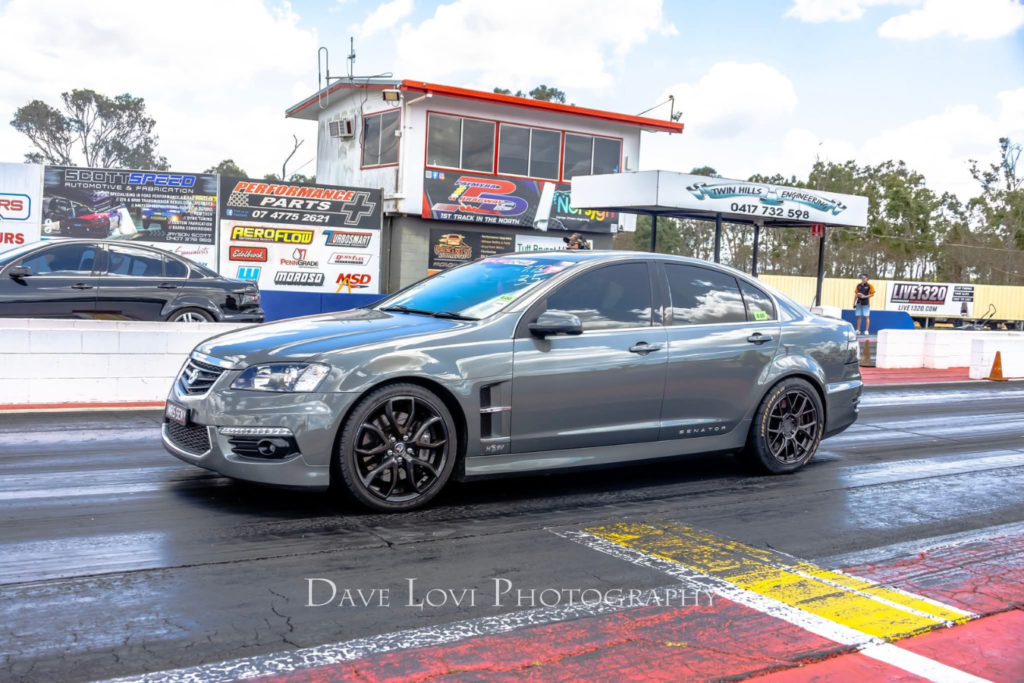
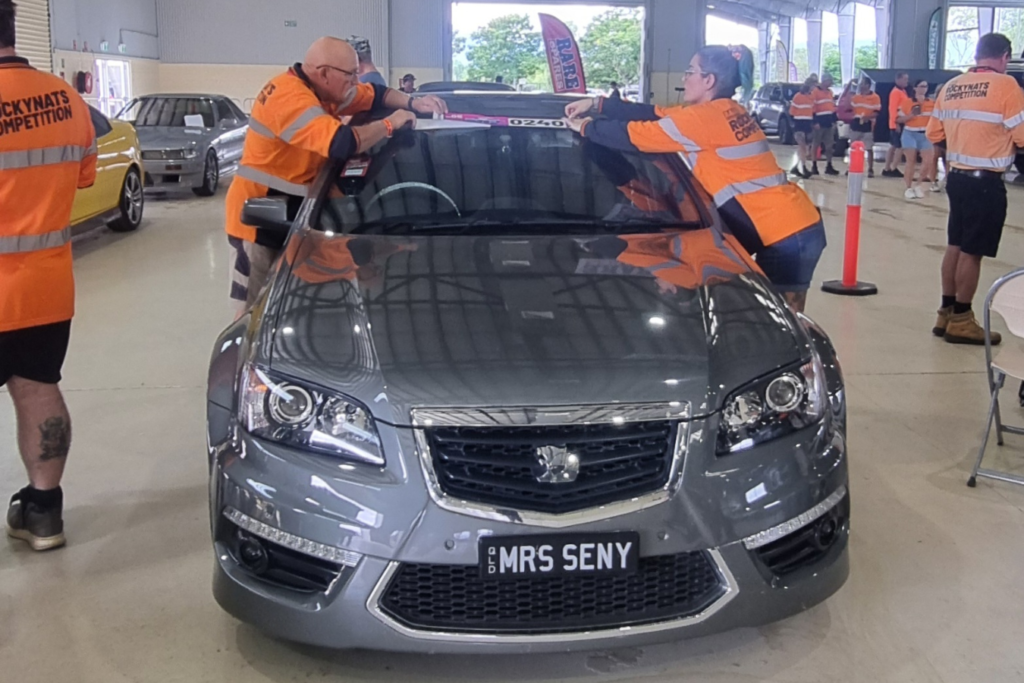
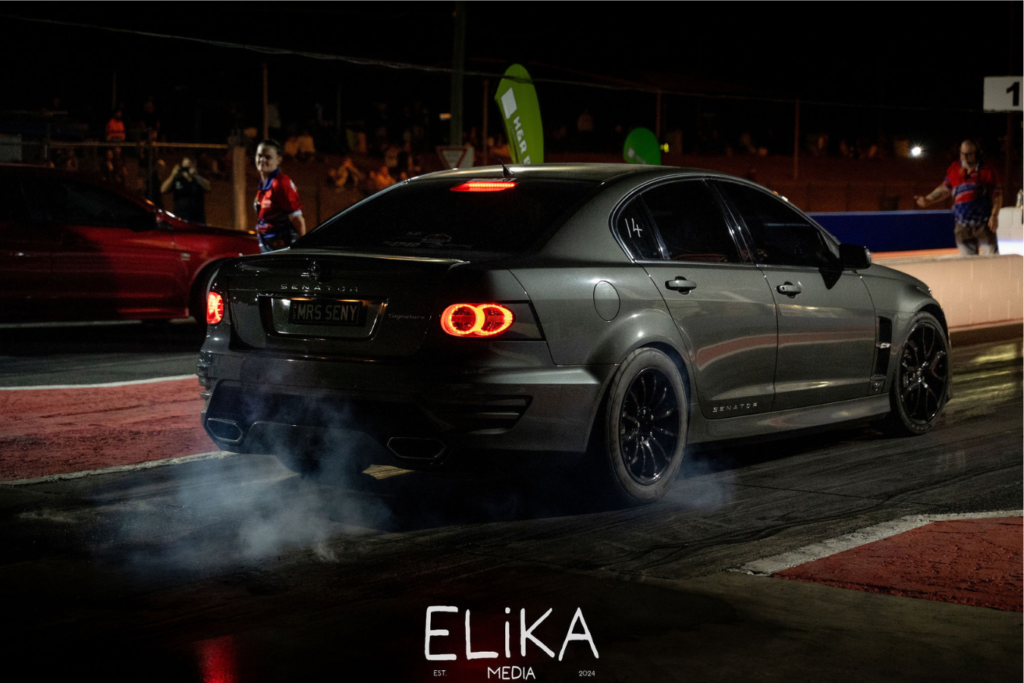 Her Senator—“Mrs Seny”—reflects the same philosophy.
Maintained, not pushed beyond reason. Modified, but with restraint. She checks it herself: tyre pressures, oil, cooling, the small indicators that tell you how a car is really tracking. It’s not about chasing numbers. It’s about keeping something consistent.
With reliable power.
“I work to keep my car happy.”
It’s said lightly, but it’s delivered with intent. Care isn’t reactive—it’s ongoing.
And that extends beyond the car.
Anna funds her own racing. Has never pursued sponsorship. Has no particular interest in turning it into something larger than what it already is.
“I’m pretty content.”
Contentment here isn’t passive. It’s deliberate. A refusal to complicate something that already serves its purpose.
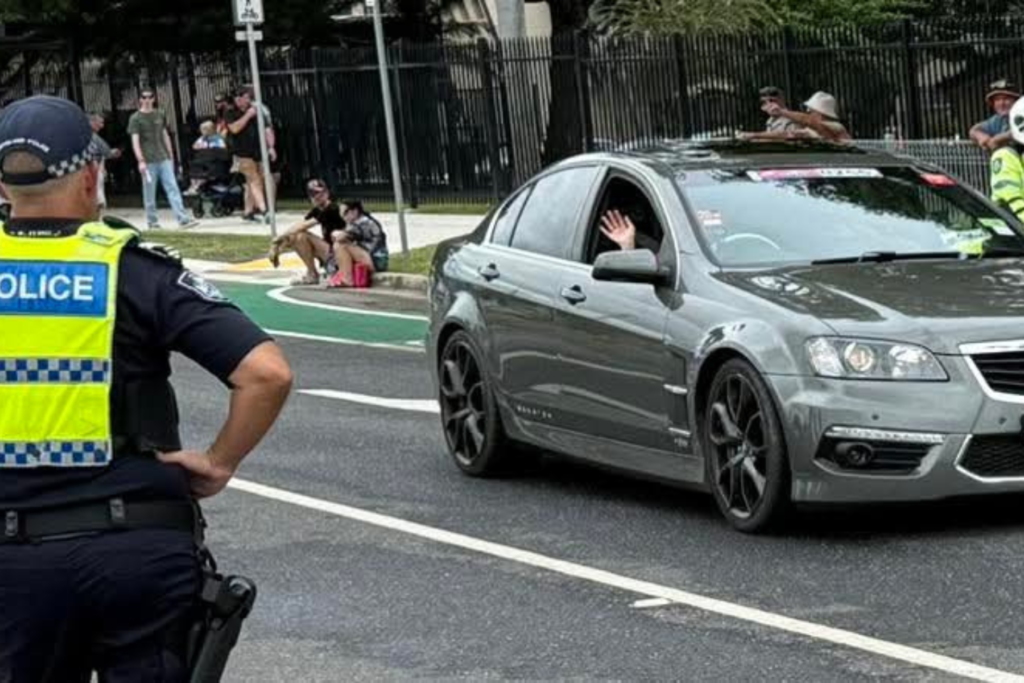
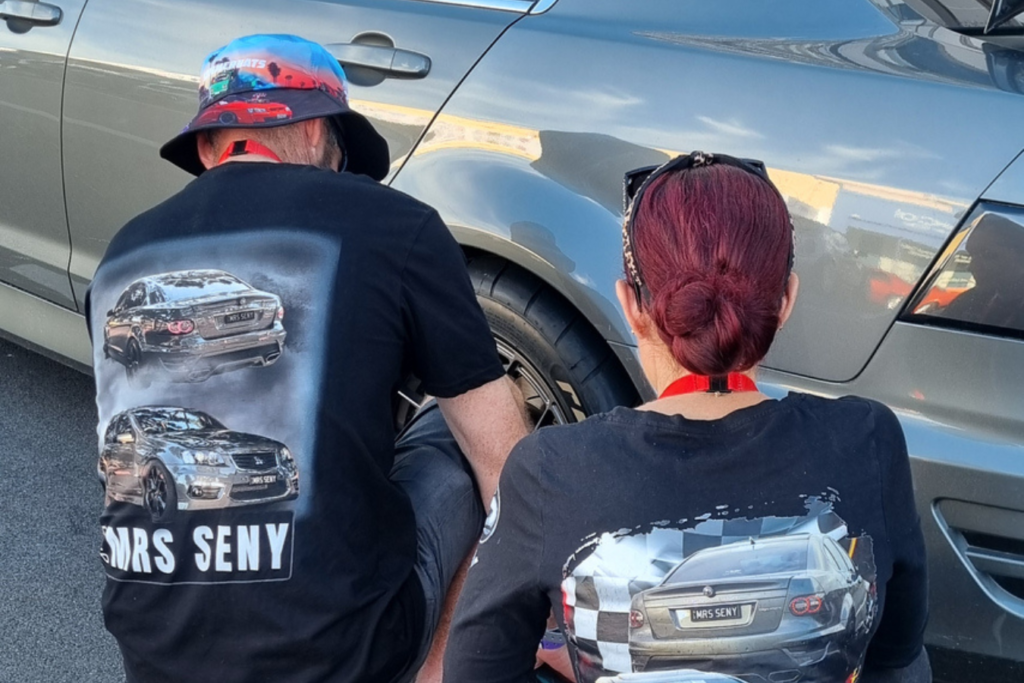 At RockyNats, the context shifts.
Closed streets. Heritage buildings. Cars moving at speed through spaces not designed for it. The backdrop changes the rhythm of it all—less clinical, more atmospheric.
“I love how it’s such a mix of cars… and you’re doing 150-plus in a 40 zone.”
There’s a sense of novelty that hasn’t worn off. Six years in, and it still holds its appeal.
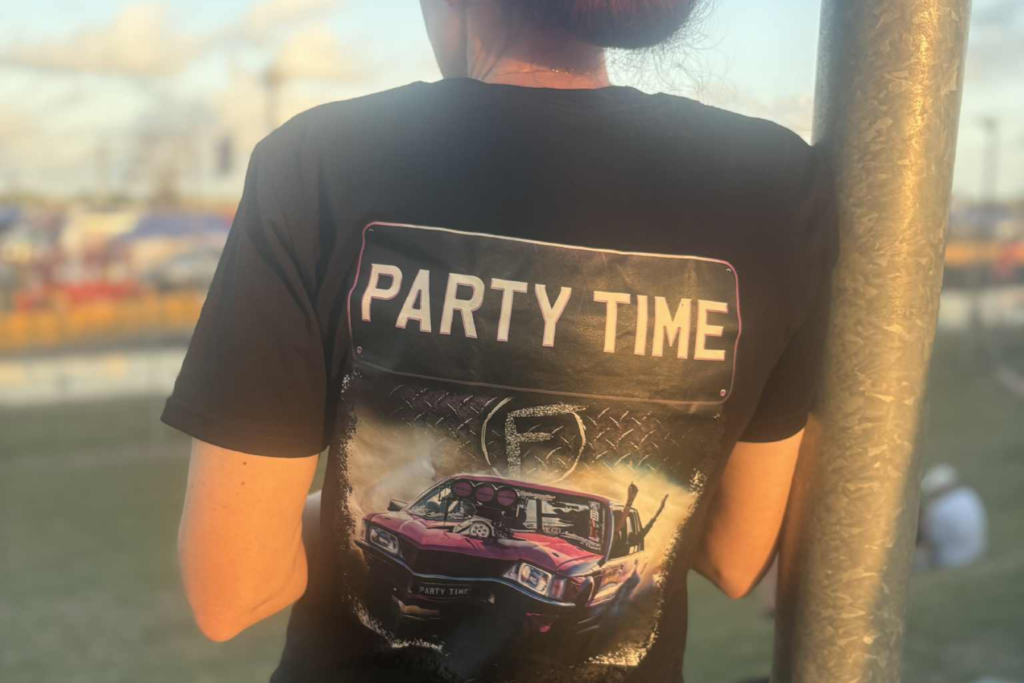
It’s also where the personal elements surface more clearly—her husband trackside, wearing a “Mrs Seny” shirt, capturing content, backing what she’s built. Supportive, but not central. The involvement is hers.
“I’m the revhead.”
Not attached. Not following. Self-directed.
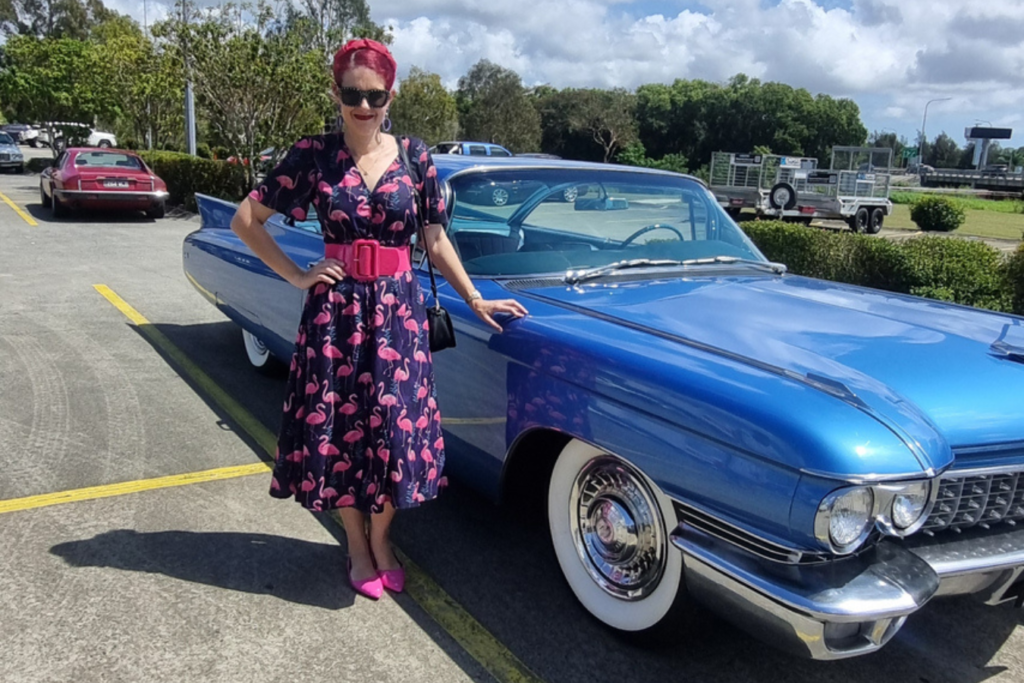
 Away from the track, her aesthetic remains as considered as her work.
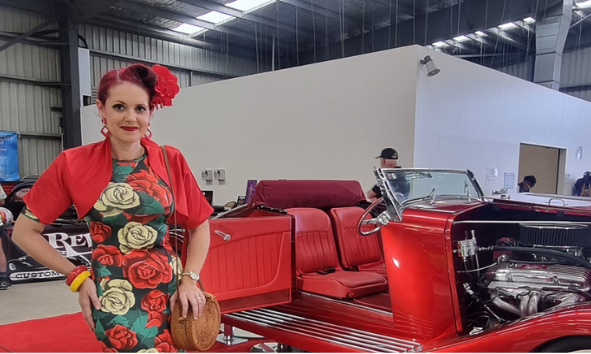
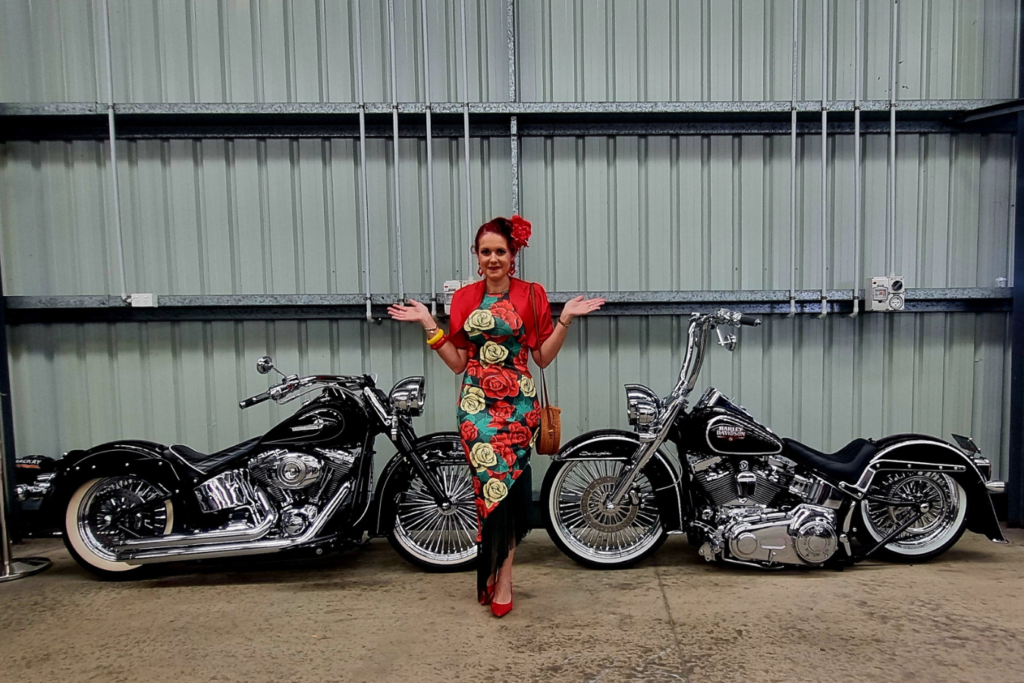
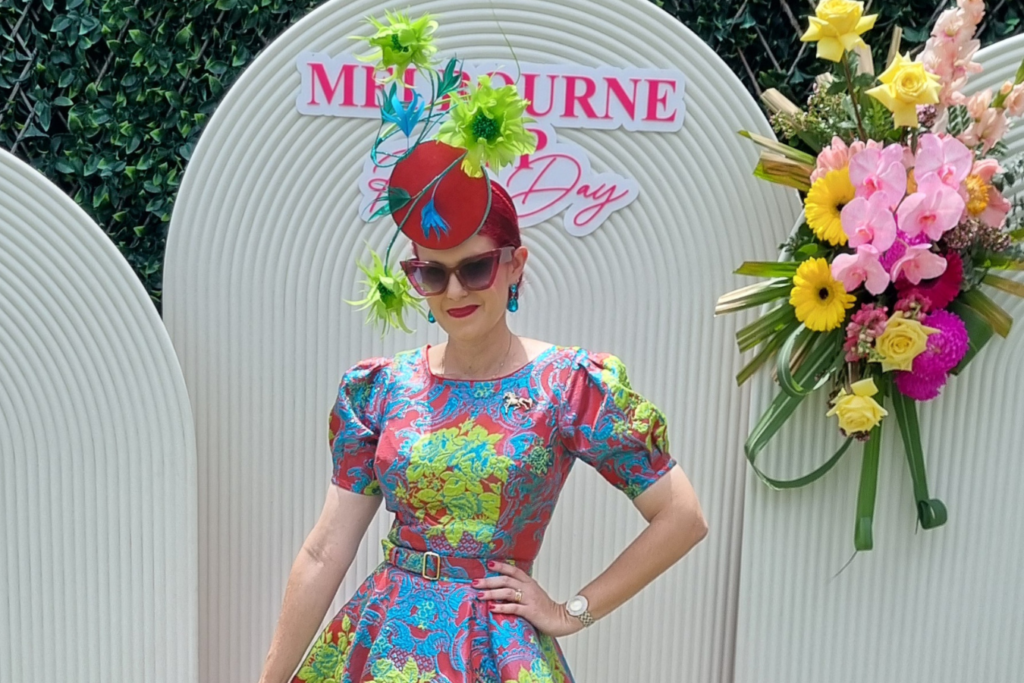
Classic pin-up influence, drawn from the 40s and 50s. Structured silhouettes. Victory rolls. Presentation that reads intentional without slipping into costume. It’s not about standing out for the sake of it—it’s about alignment.
“I’m definitely a dress girl.”
At events, practicality takes over—jeans, movement, function. But the identity doesn’t shift. It adjusts to context.
The same person who constructs bridal gowns, who understands form and finish at a professional level, is the one managing traction and throttle input on a marginal surface.
There’s no contradiction to resolve.
Only range.
 Over time, what others think has become less relevant.
“Now I just don’t care.”
Not dismissive—just filtered. If it doesn’t add value, it doesn’t stay.
That clarity shows up in how she moves through the space. Independent, but not isolated. Supported, but not reliant. Known, but not defined by it.
She shows up, does what she came to do, and leaves without needing to reshape the experience into something else.
 For those watching from the sidelines—the ones weighing up whether to step in—her advice is direct.
“Give it a go.”
Not when it’s perfect. Not when it feels comfortable. Just start.
Her own entry point wasn’t early. It wasn’t optimised. But it was hers.
And that’s what remains consistent across everything she does.
Not the discipline.
Not the setting.
But the way she approaches it.
Measured. Self-contained. Entirely her own.


What’s your why? Whether you’re a racer, behind the camera, on the tools, or the loudest cheerleader, we want to hear your story! Share with us your passion and motivation to inspire others. Submit your story: https://bit.ly/4aYoxO4